
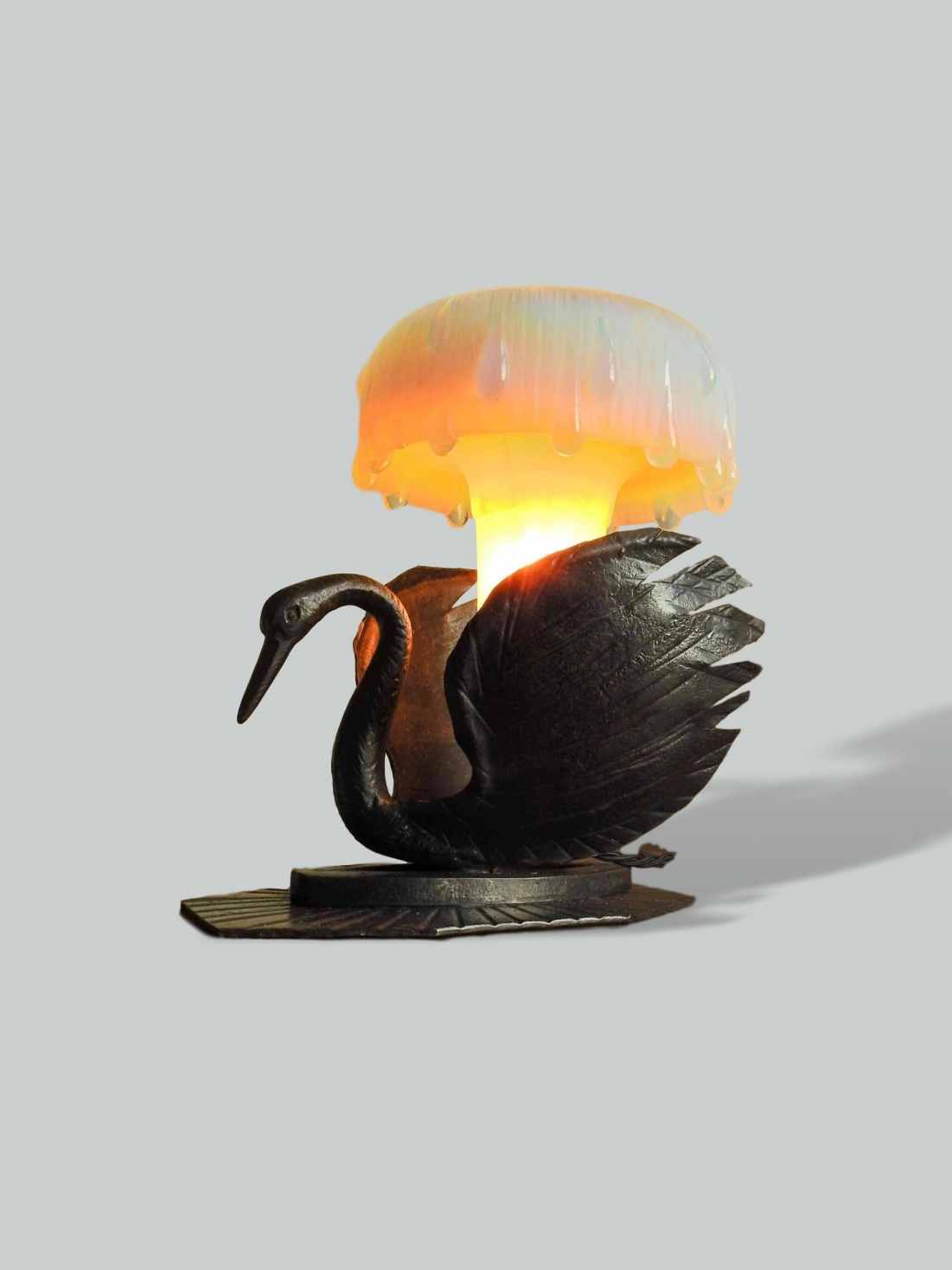
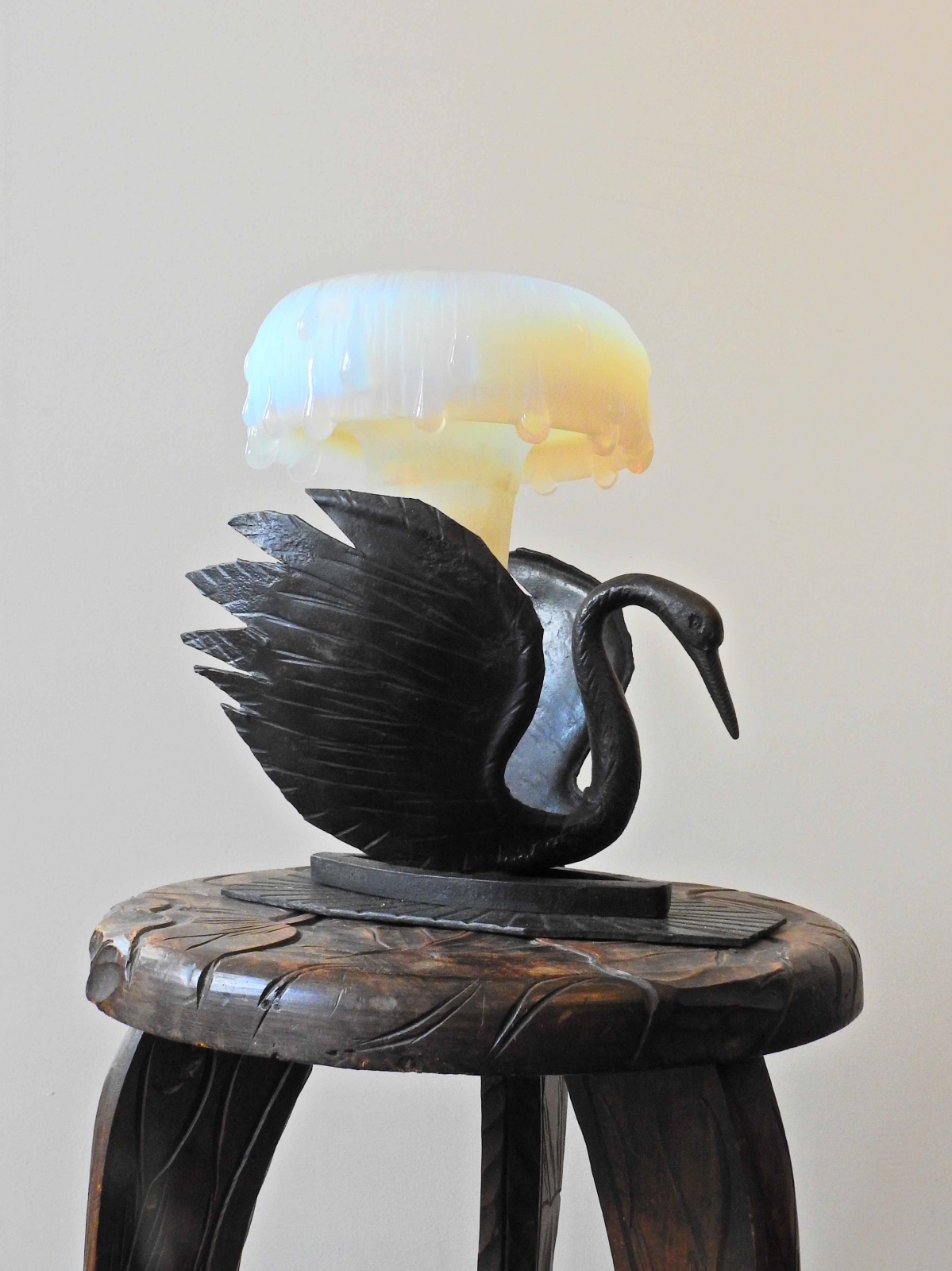
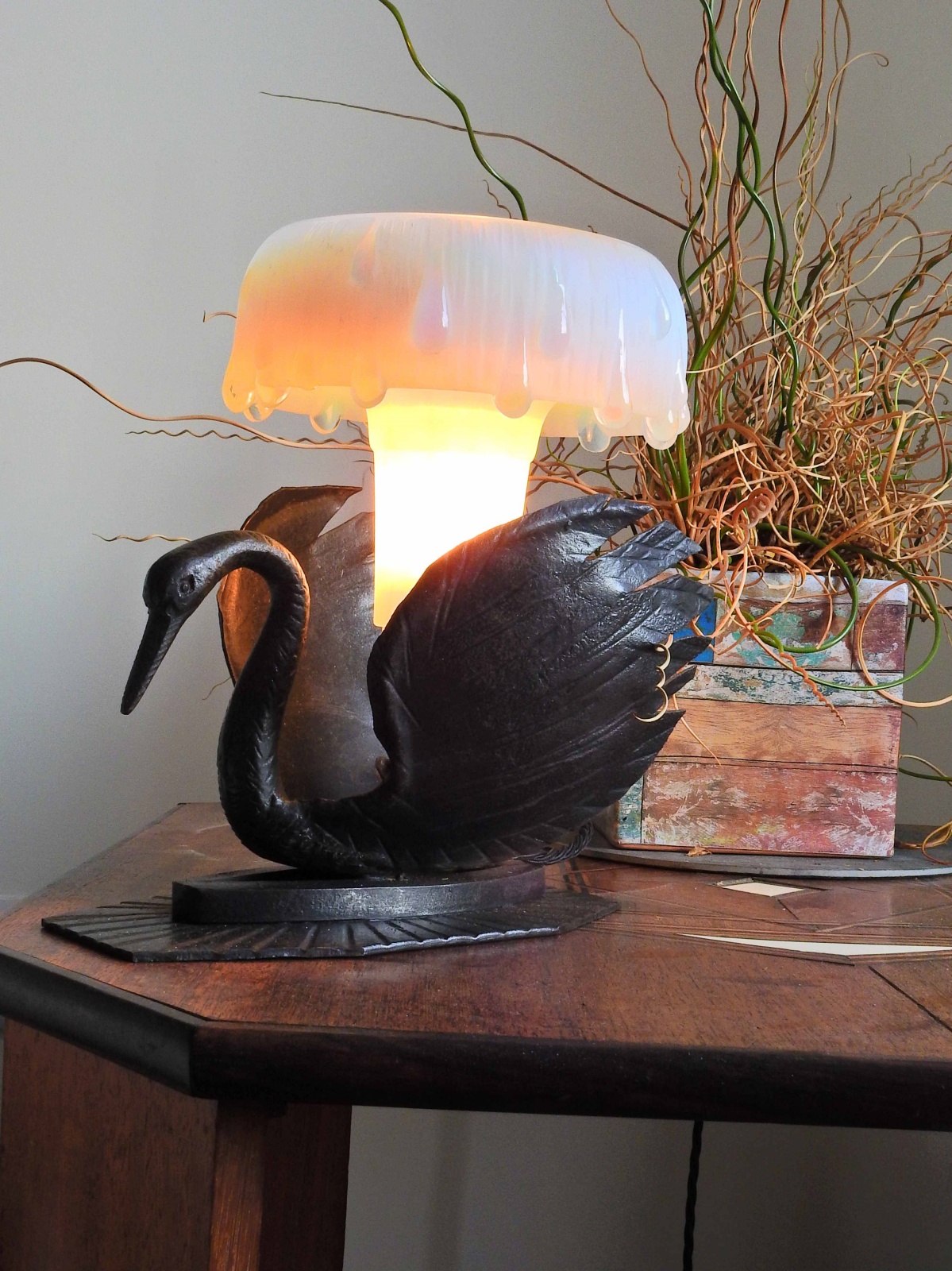
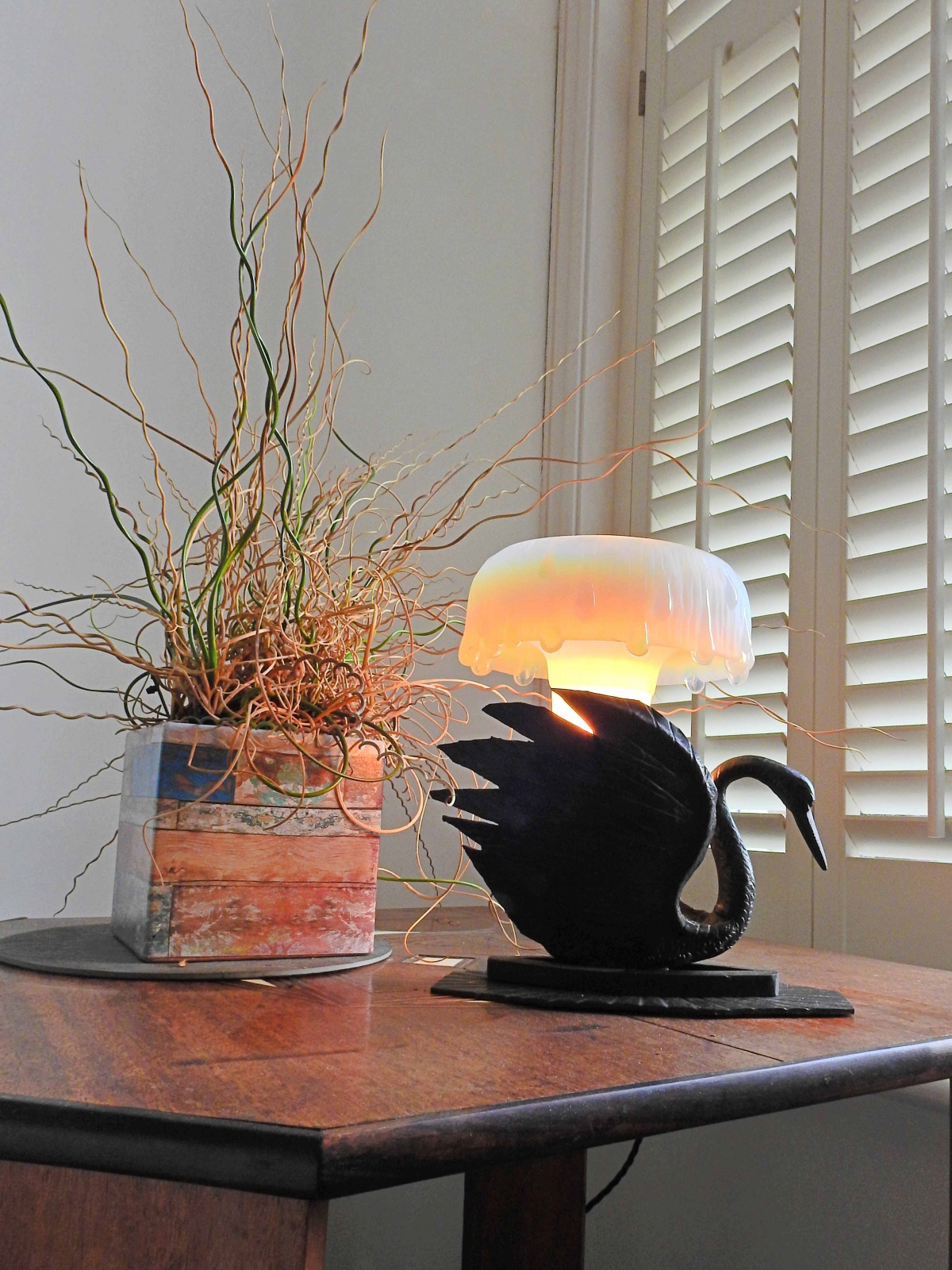
Attributed Marcel Vasseur with Ezan(Jean Gauthier) | Art Deco “Swan” Night-Light | France c.1930-40 | SOLD
Product Code: TJP011E023A wrought-iron and opalescent glass veilleuse designed as a swan attribute to Marcel Vasseur with strongly-opalescent glass lampshade of waterfall form by Establishment Jean Gauthier (E.J.G), Ezanville (Ezan). France c.1930-40
Ht.23cm/9in, Lgth.20/8
Marcel Vasseur, Paris (1885-1962)
- 1885: Born in Paris, he would go on to become one of the most prolific French ironworkers of the Art Deco period.
- c.1910–1920: Establishes his own independent forge and workshop at 22 Rue Mousset-Robert in Paris. This remained his primary base of operations throughout his career.
- 1922: Becomes a primary collaborator for Galeries Lafayette’s newly formed “La Maîtrise” studio, producing ironwork signed with the FAG (Ferronnerie d’Art des Galeries) stamp.
- 1925: The landmark International Exhibition of Decorative and Industrial Arts in Paris.
- 1925–1935: The “Golden Era” of his production. During these years, he produced his most famous hammered wrought iron lighting fixtures and furniture, often featuring geometric “perlé” (beaded) decorations.
- 1962: Vasseur passes away, leaving behind a massive body of work that is now highly sought after by Art Deco collectors.
Etablissement Jean Gauthier (E.J.G) 1919-1939
Rue J.Robert, Paris & Ezanville
- Etablissement Jean Gauthier was a major French art deco glassworks established by the designer Jean Gauthier.
- The company is highly regarded for its moulded-pressed Art Deco glassware, often used in architectural lighting and chandeliers
- Jean Gauthier had his first workshop at 12-14 rue Jean Robert in Paris and later expanded with factories in the town of Ezanville.
- In the early days just after the first world war Gauthier made cameo shades that were sometimes signed Gauthier.
- Glass was signed E.J.G for “Etablissement Jean Gauthier” and J.Robert based on the street name of the first workshop.
- In the 30s Gauthier started a line of opalescent glass, using industrial methods, that allowed for the geometric and modernist designs typical of the 1930s.
- This glass is often signed EZAN France, based on the location of the factory in Ezanville.