

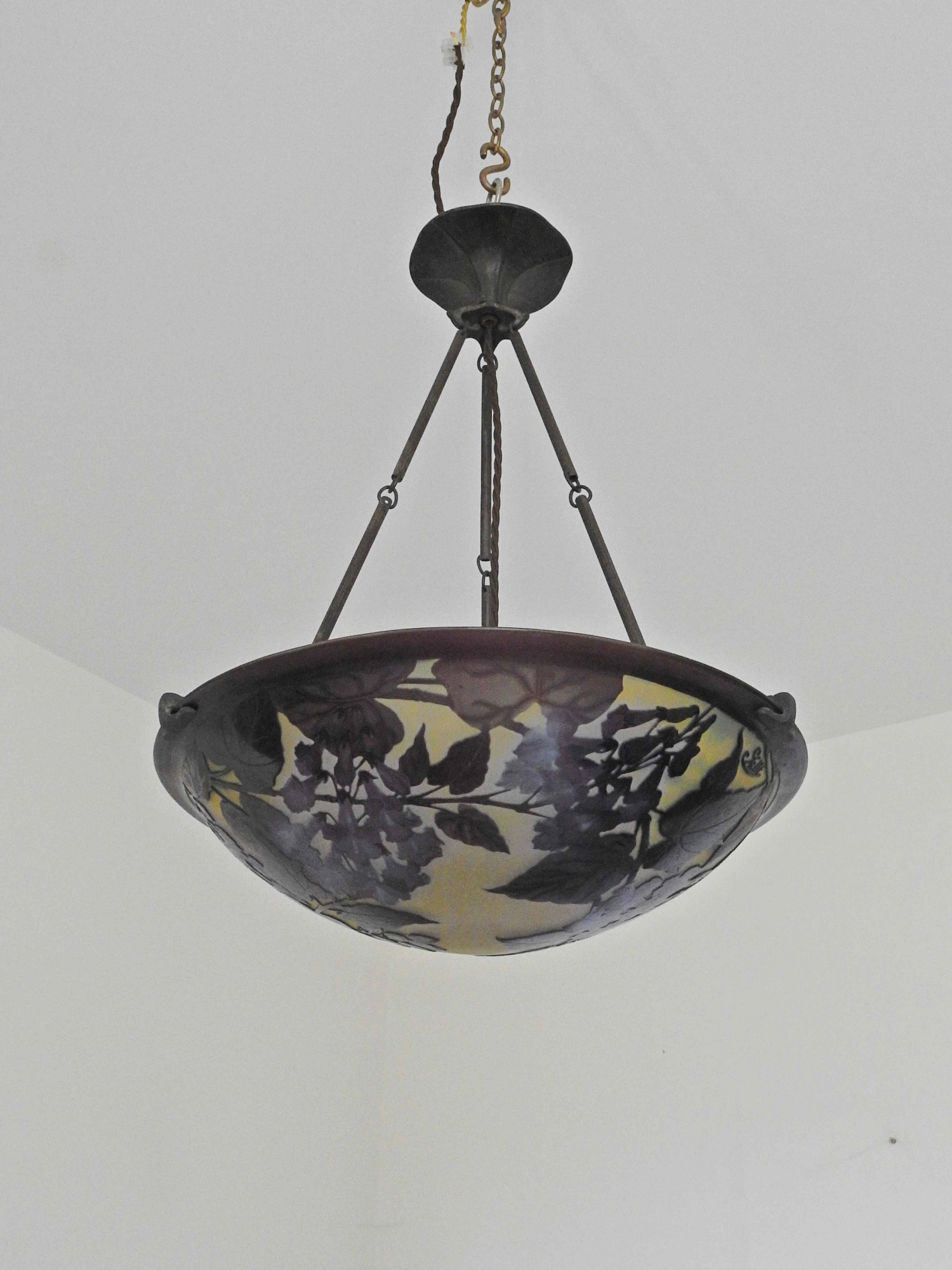
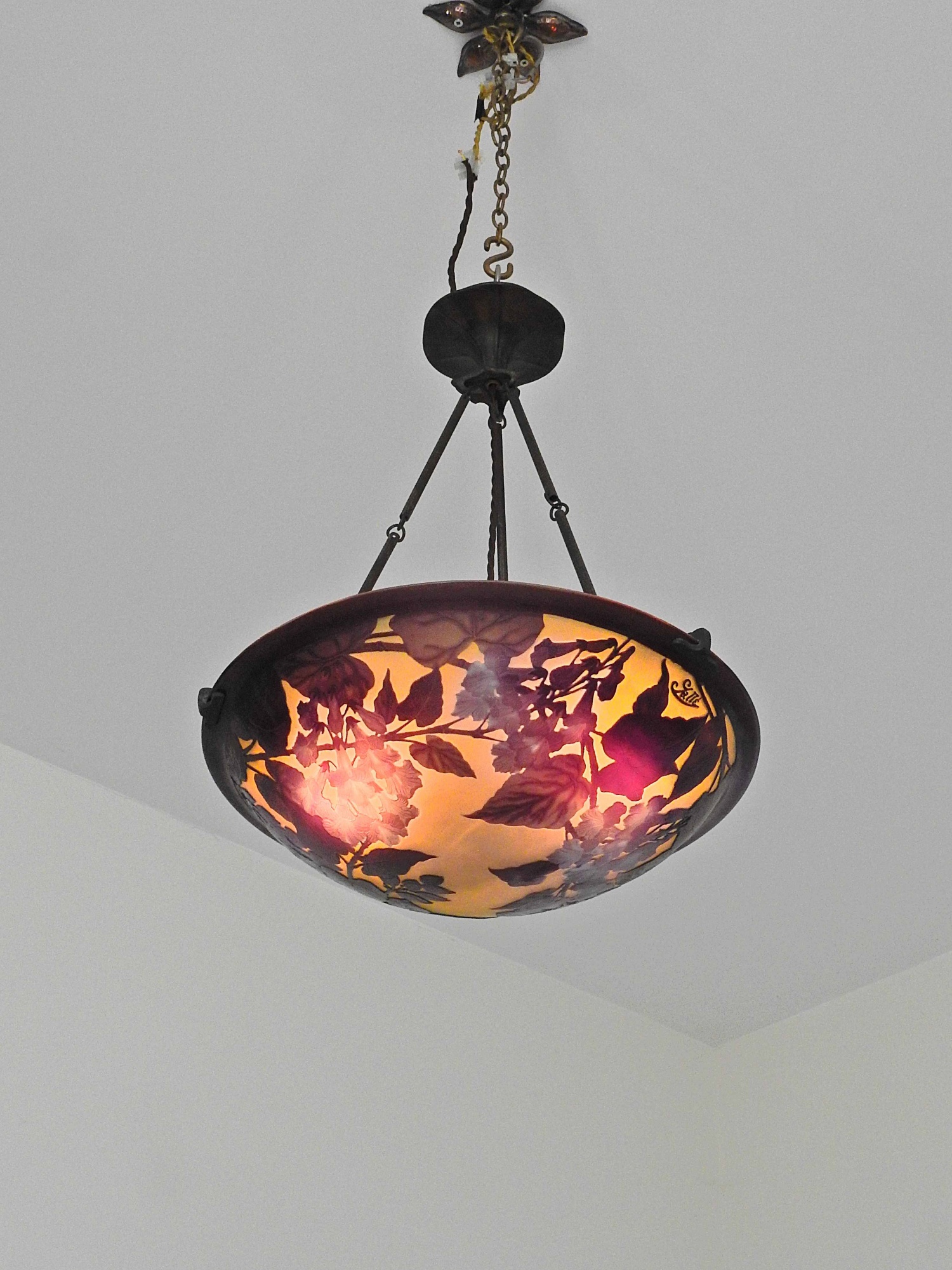
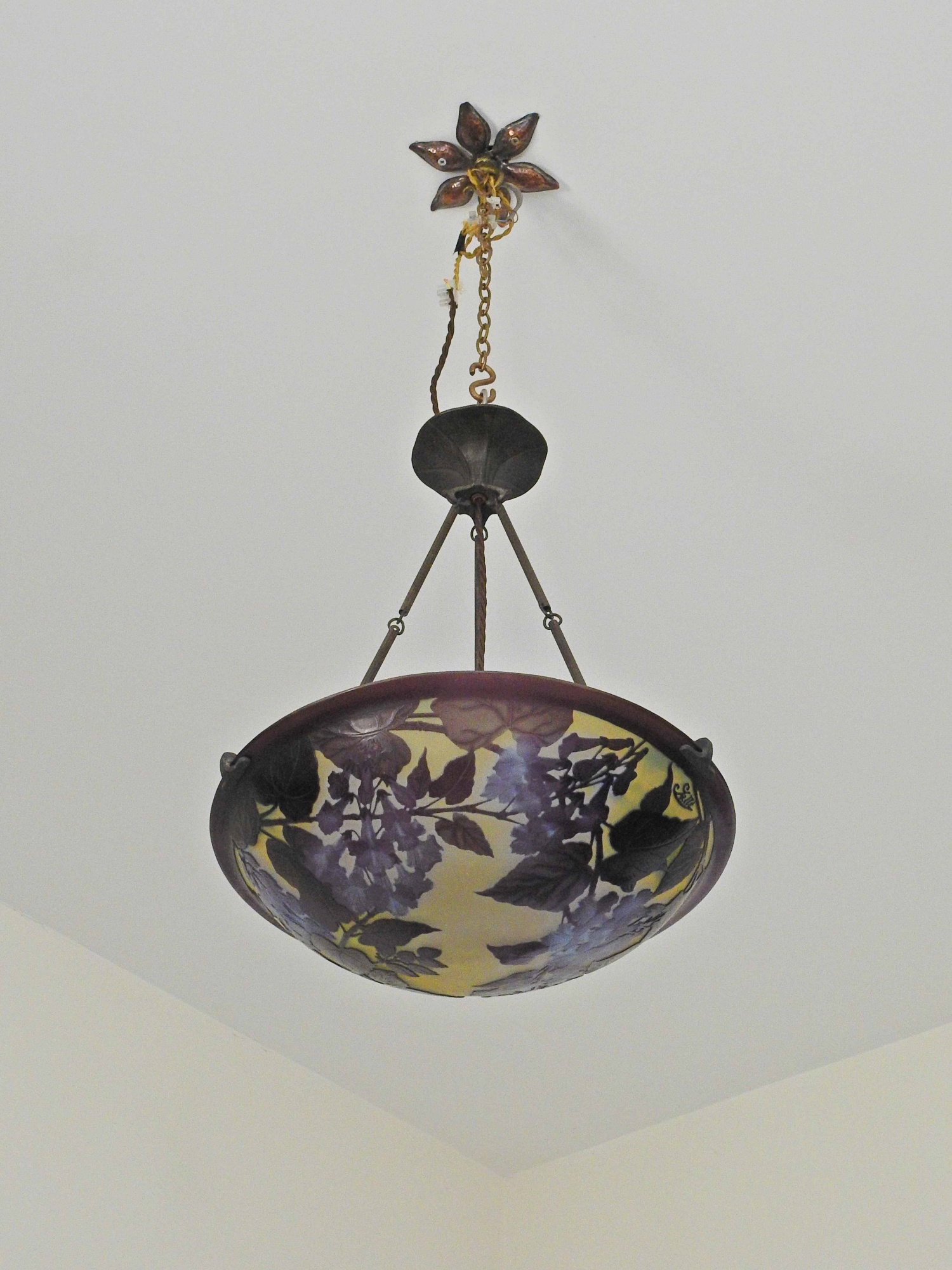
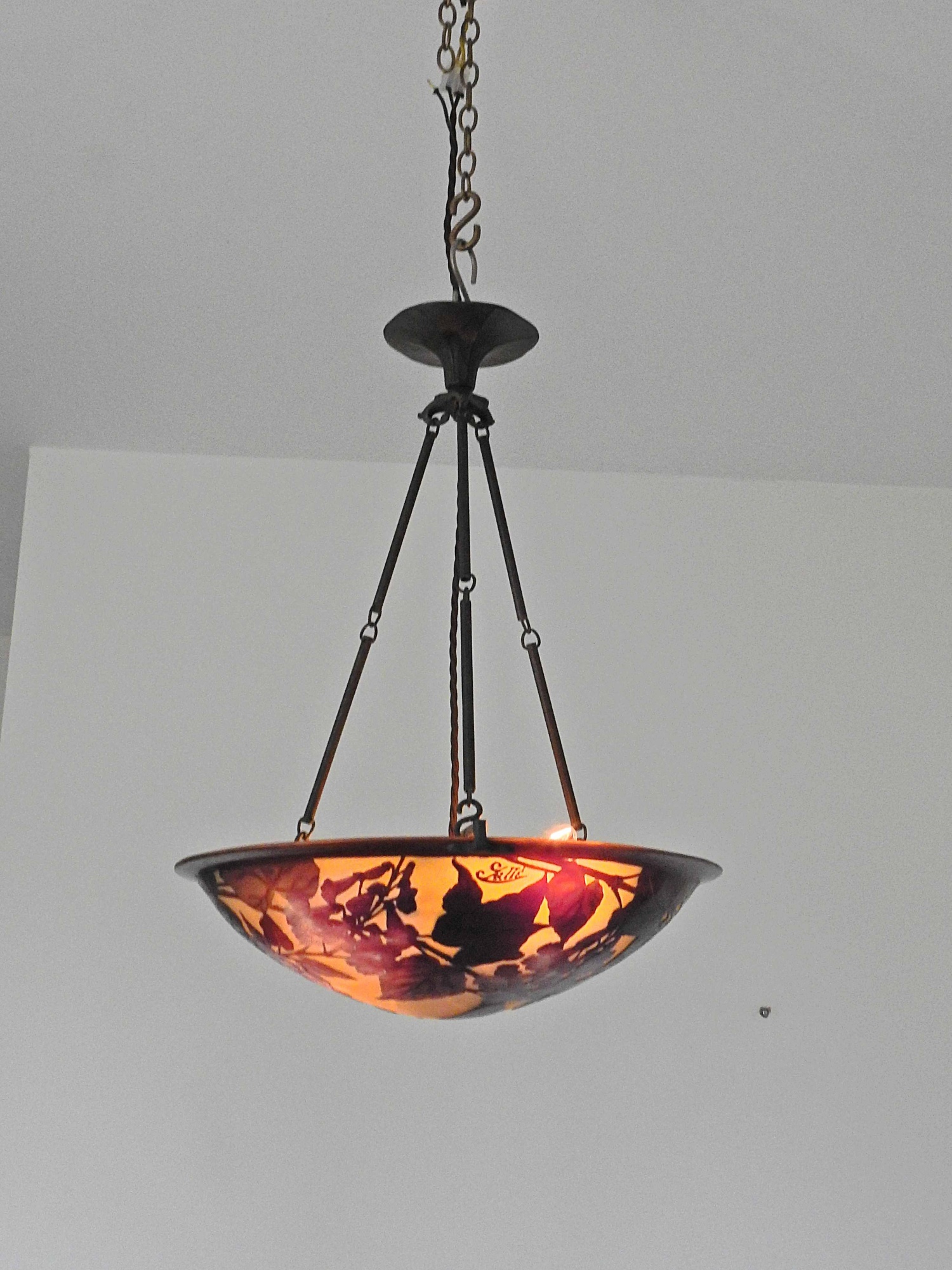
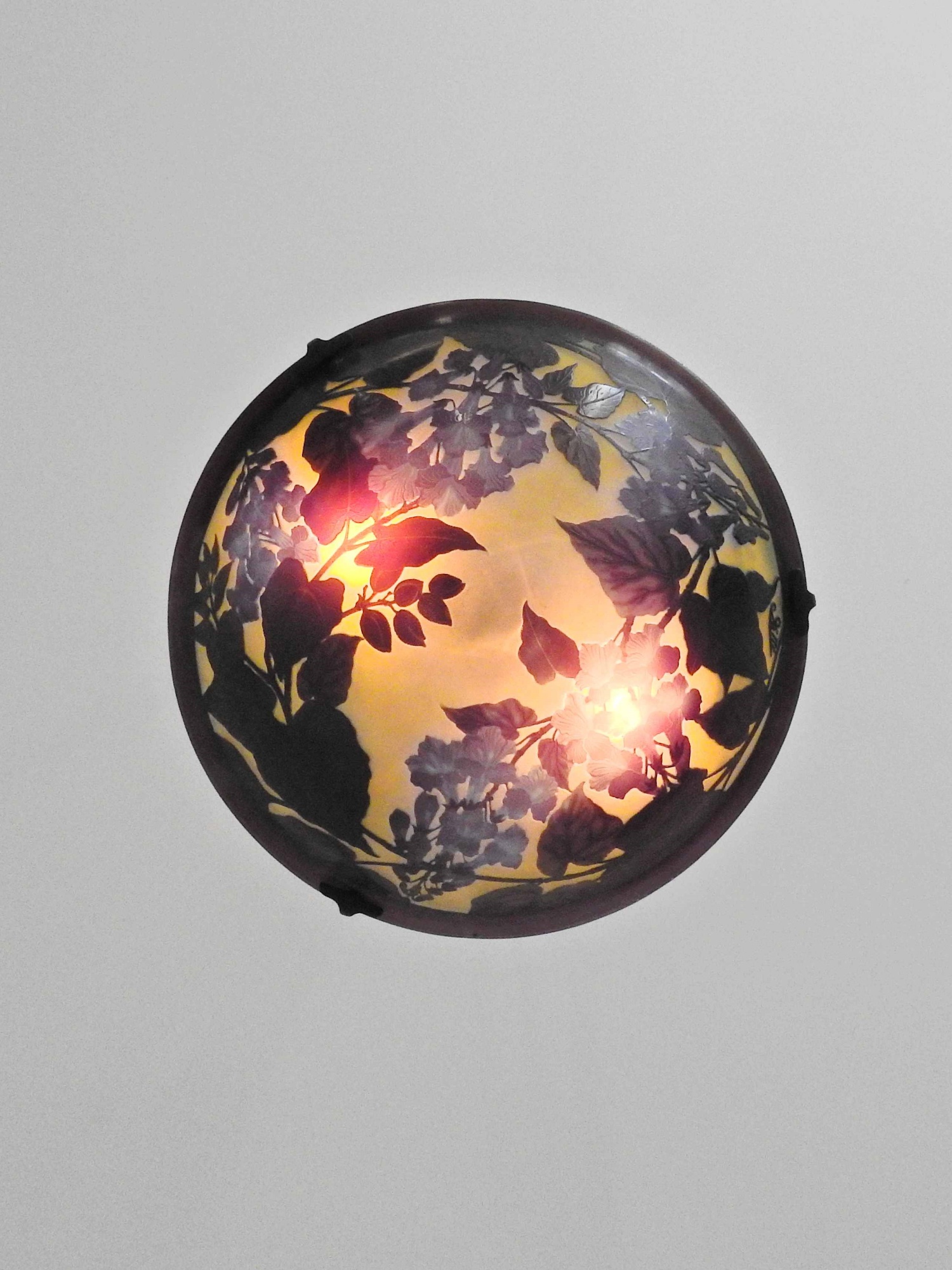
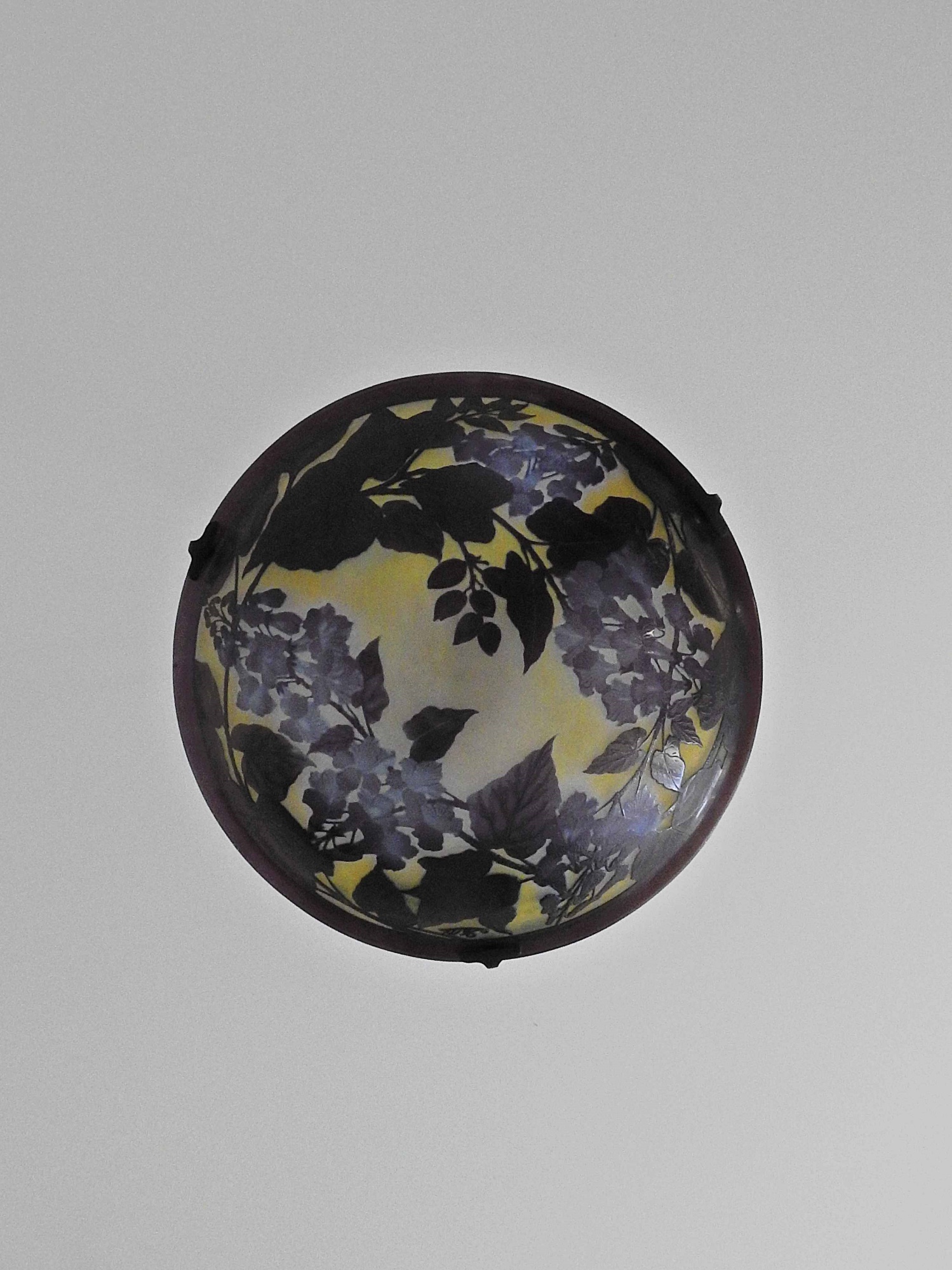
Émile Gallé, Nancy | Cameo-glass Plafonnier | France c.1910-20 | SOLD
Product Code: LG498A cameo-glass plafonnier by Émile Gallé in shades of blue and violet on a yellow ground, designed with hanging trumpet-shaped flowers and foliage: Complimented with the original bronze ceiling rose and fitments for suspension. Cameo signature “Gallé”; France c.1910-20.
Dimensions / Specifications:
- Ht.(not reducible) 52cm/20.5in, Diam.41/16
- Supplied with addional 3.5in ceiling rose
- height extendable for an additional charge
Not Included:
- 3 x B.22 (4w or 6w) L.E.D Candle Bulb (Available to purchase in our accessories department)
- Screw fixings
Émile Gallé, Nancy (1846–1904)
Cristallerie d’Émile Gallé
- Émile Gallé was a glass maker, ceramist, and designer known as one of the most outstanding glass artists of the 19th-century. He is also regarded as the a pioneering artist of the Art Nouveau Movement.
- Gallé was born in Nancy, France, in the home of a faience and furniture manufacturer.
- As a young man, Gallé studied drawing, philosophy, and botany, and he later learned glassmaking at Meisenthal. He joined his father’s factory in Nancy, and, in 1873, he began to produce fine pottery, jewellery, and furniture in his own glass studio.
- In 1874, Gallé took over his father’s factory. His early work involved using clear glass decorated with enamel. He soon turned to using opaque glass etched with plant motifs in two or more colors.
- In 1878, Gallé wins a Grand Prix at the Paris Universal Exhibition, bringing international fame to his innovative glass techniques. and later at the Paris exhibition in 1889.
- 1894: He establishes his own extensive glass factory in Nancy, allowing for larger-scale production of cameo glass.
- 1901: He founds the École de Nancy, an alliance of artists (including Daum and Majorelle) that cements Nancy as the capital of French Art Nouveau.
- He died in 1904, in Nancy, and his wife took over the running of the business until 1914, when war broke out.
- To distinguish pieces made immediately after his death, a small relief star (*) was added next to the “Gallé” signature. These are known by collectors as the “Star Period” pieces.
- 1918–1936: The factory reopens under the direction of his son-in-law, Paul Perdrizet. During this time, they focused heavily on industrial multi-layered cameo glass (acid-etched) to meet high demand.
- 1936: The Gallé factory officially closes its doors due to financial difficulties and the shift in public taste toward Art Deco and modernism.