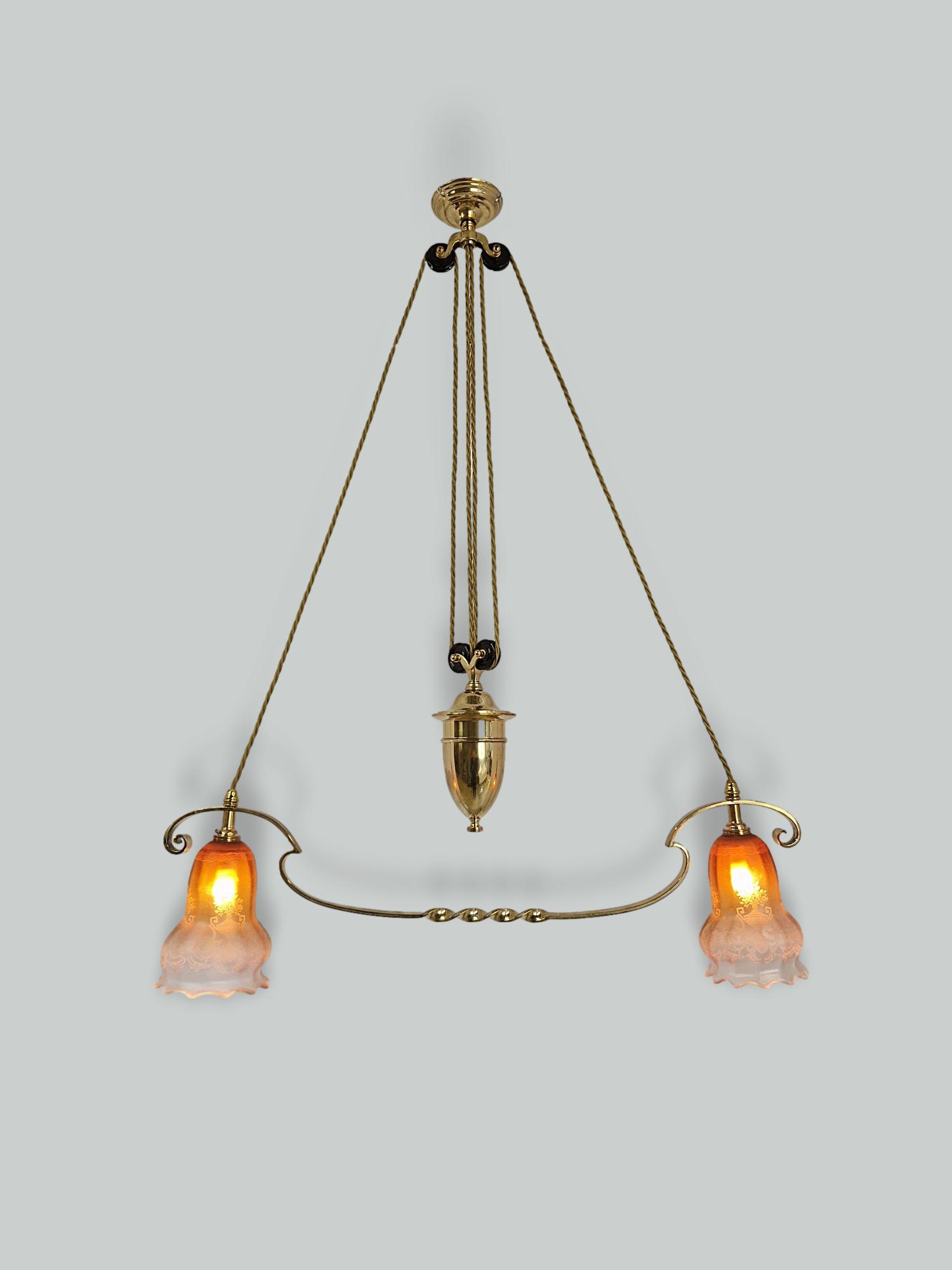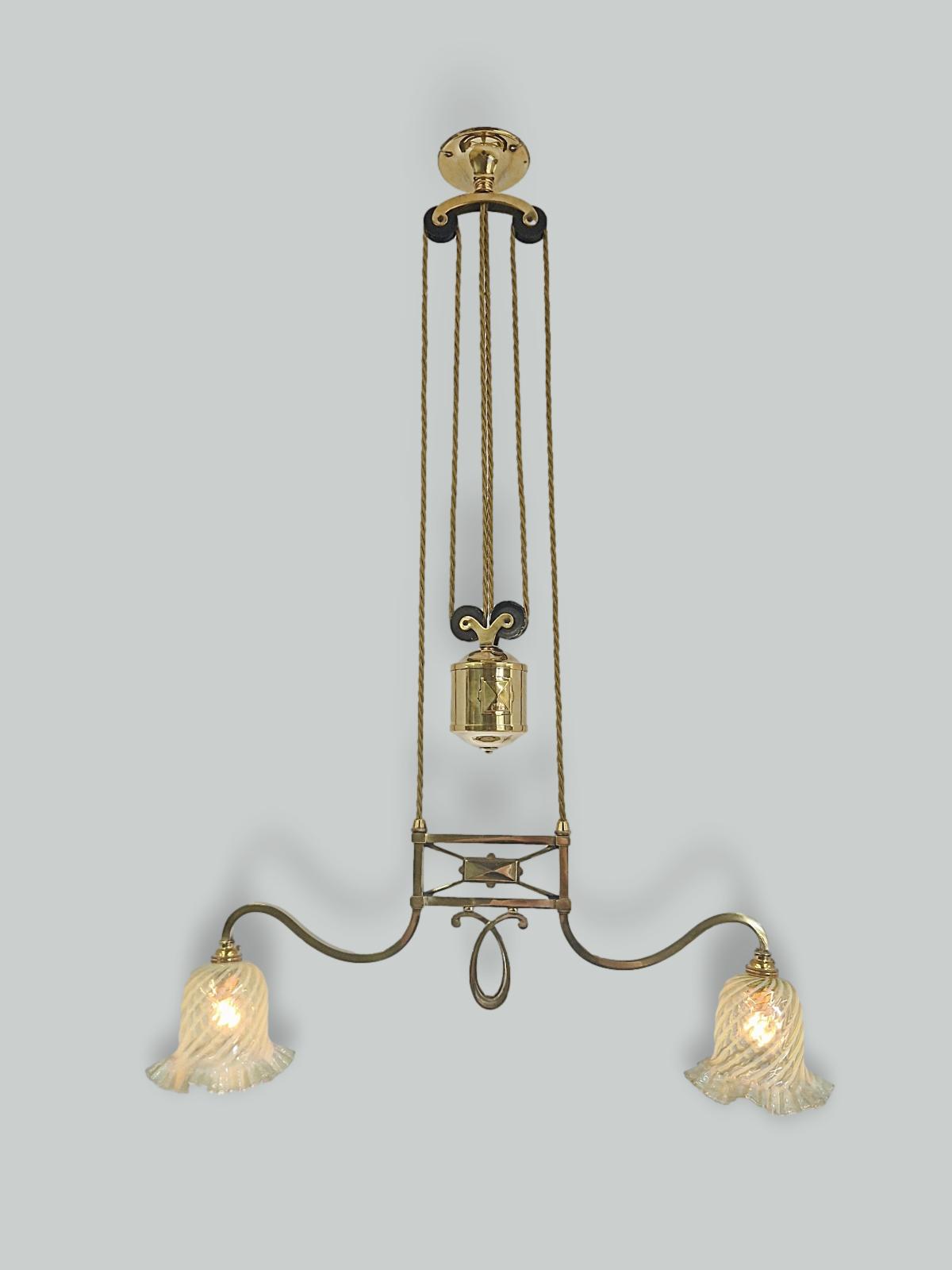

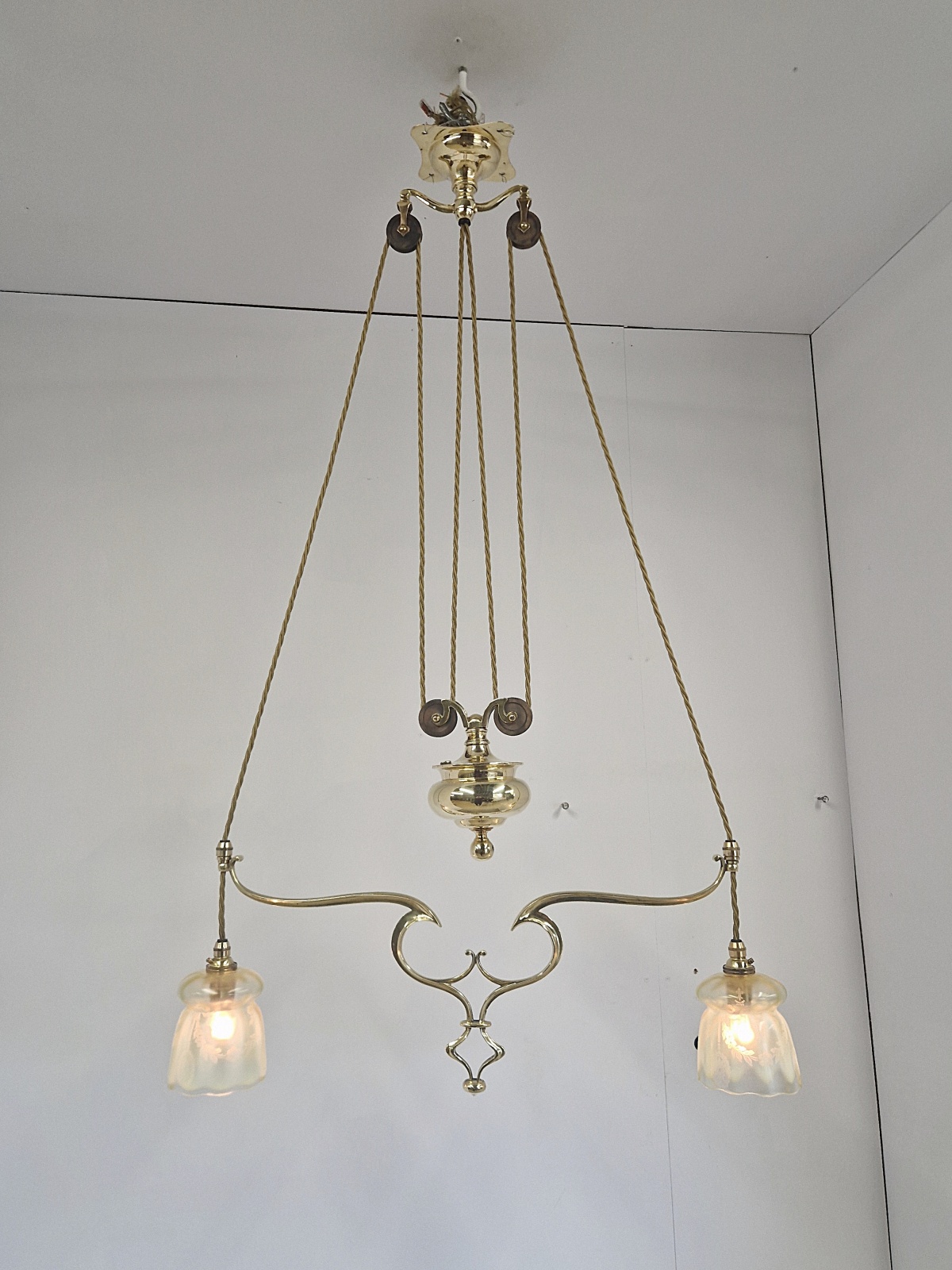
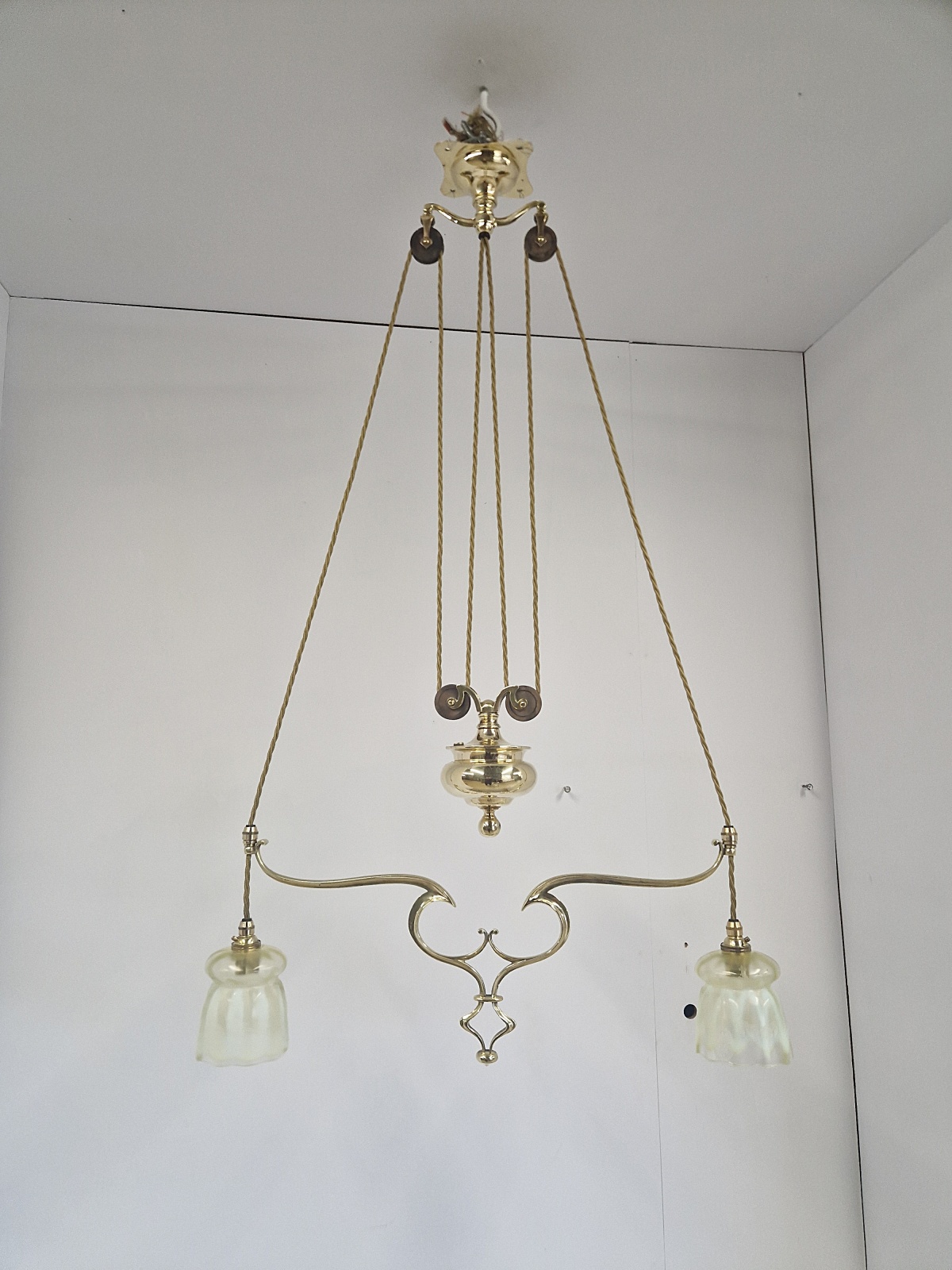
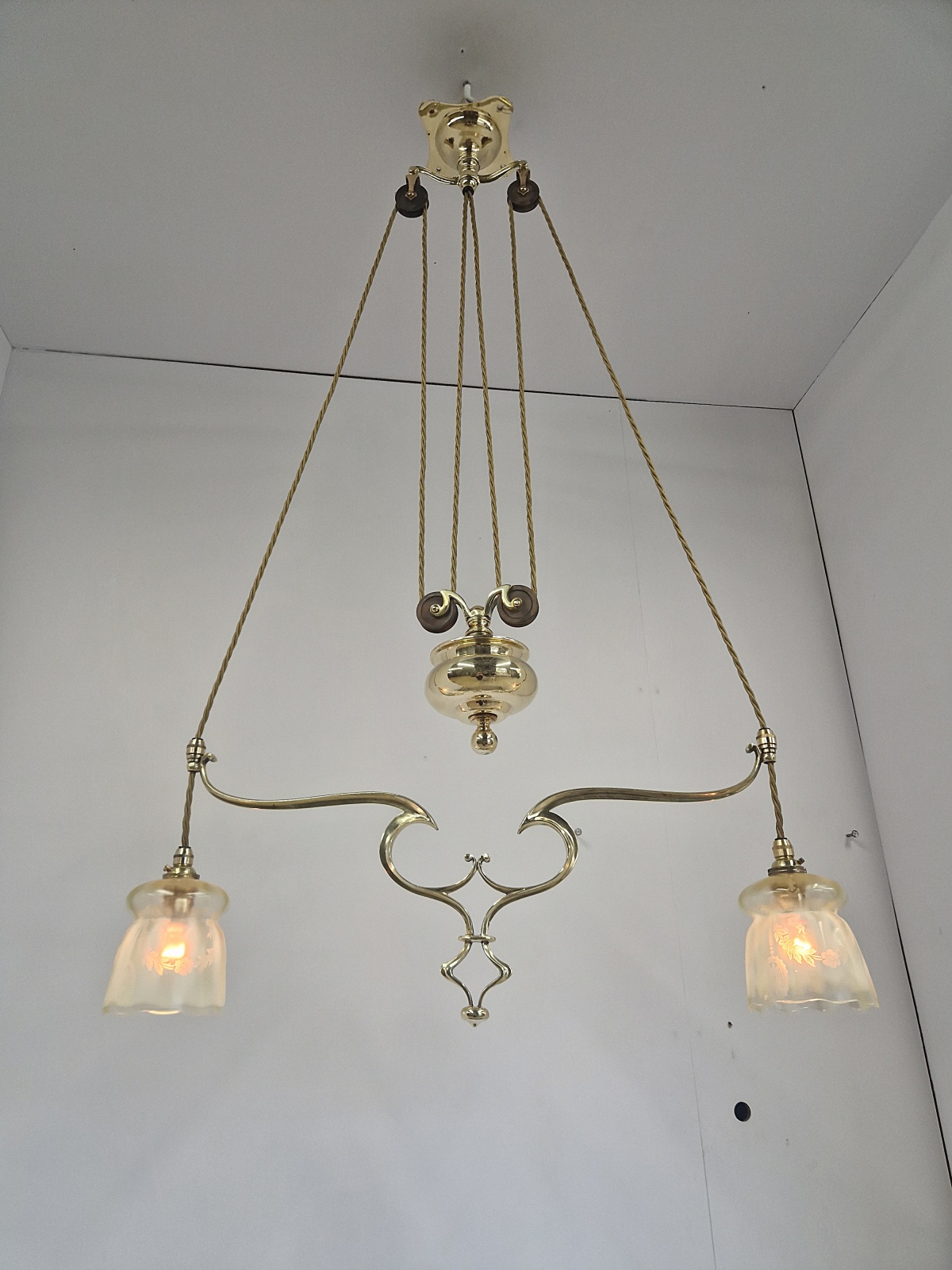
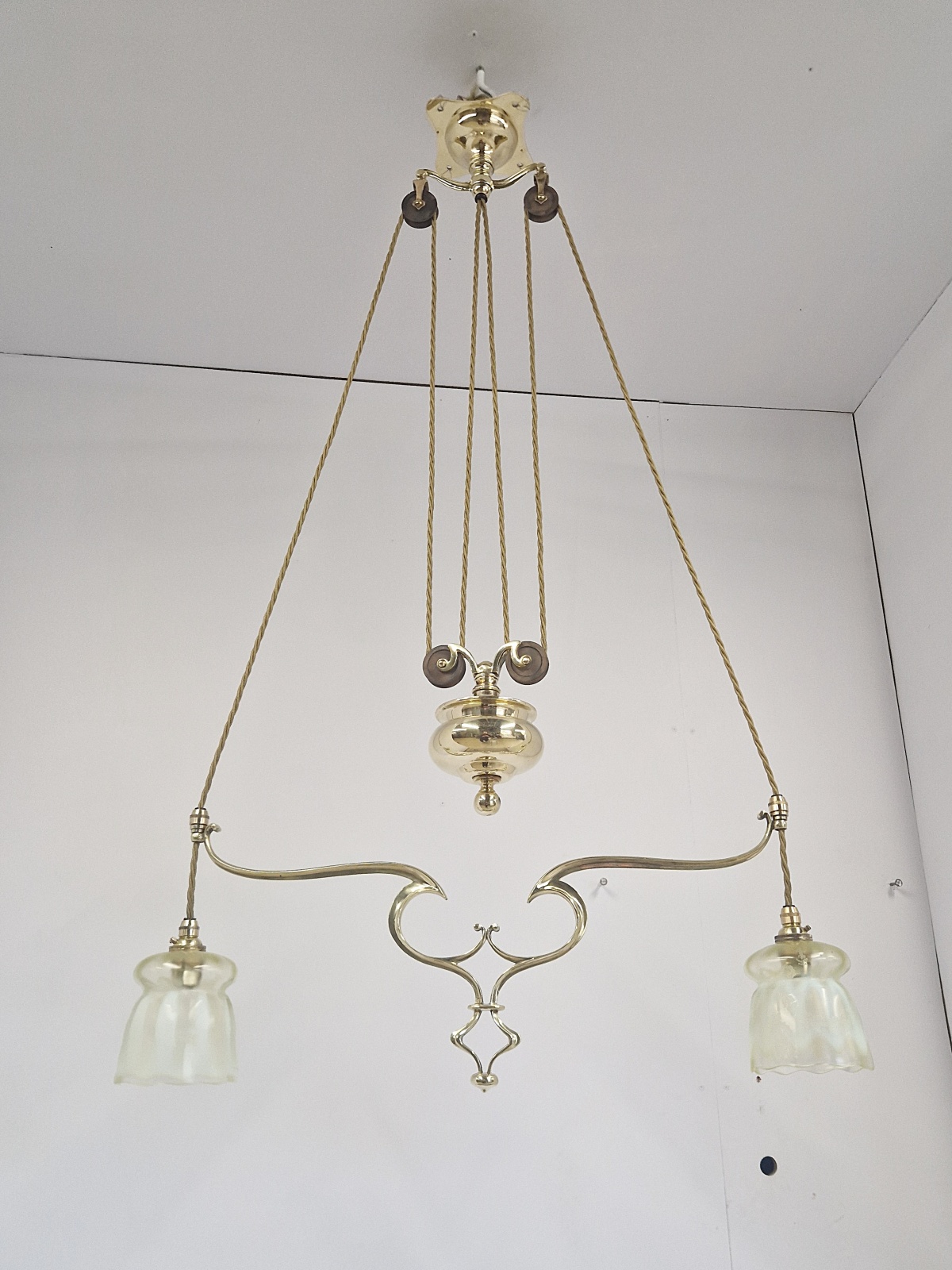
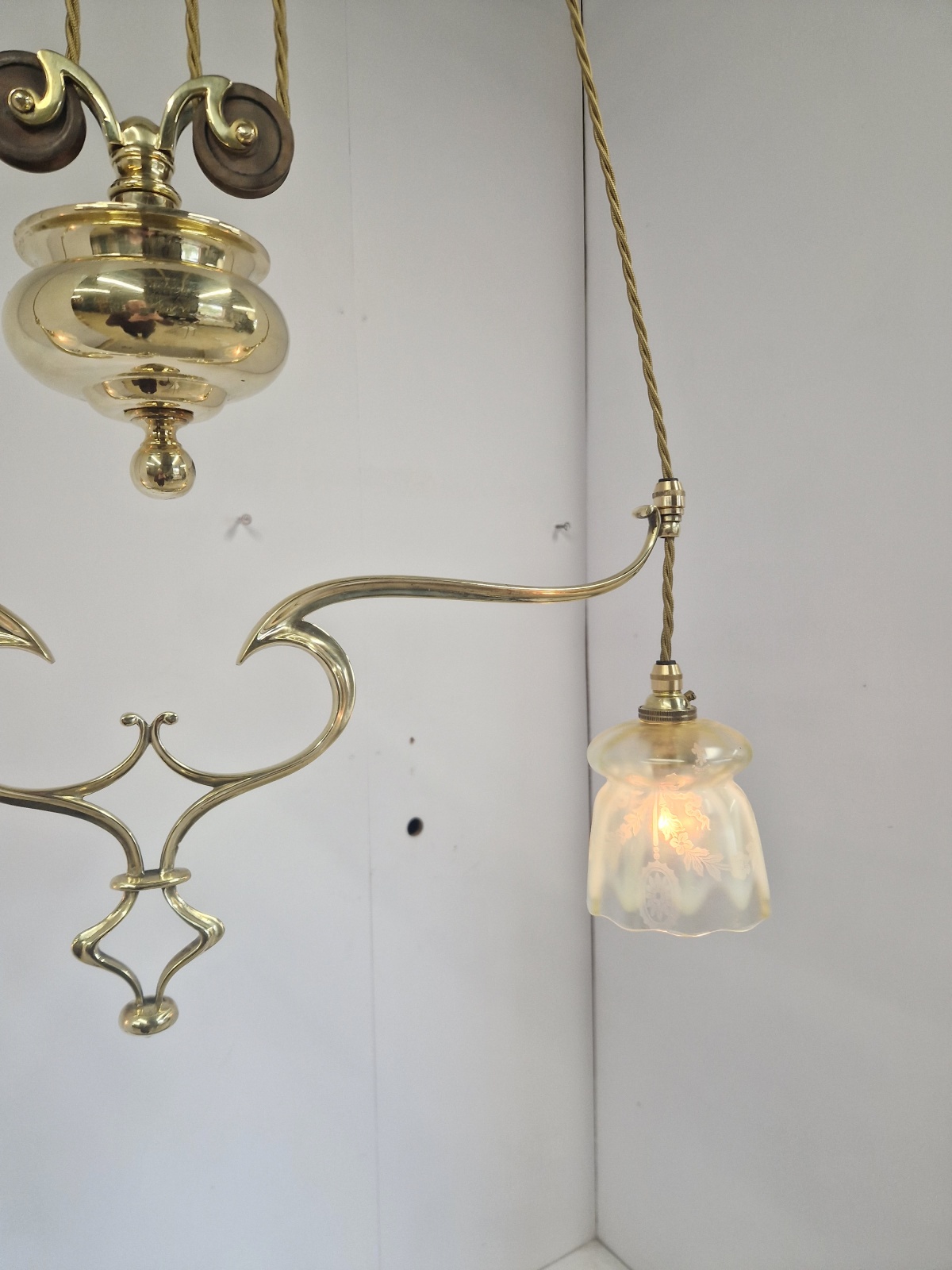
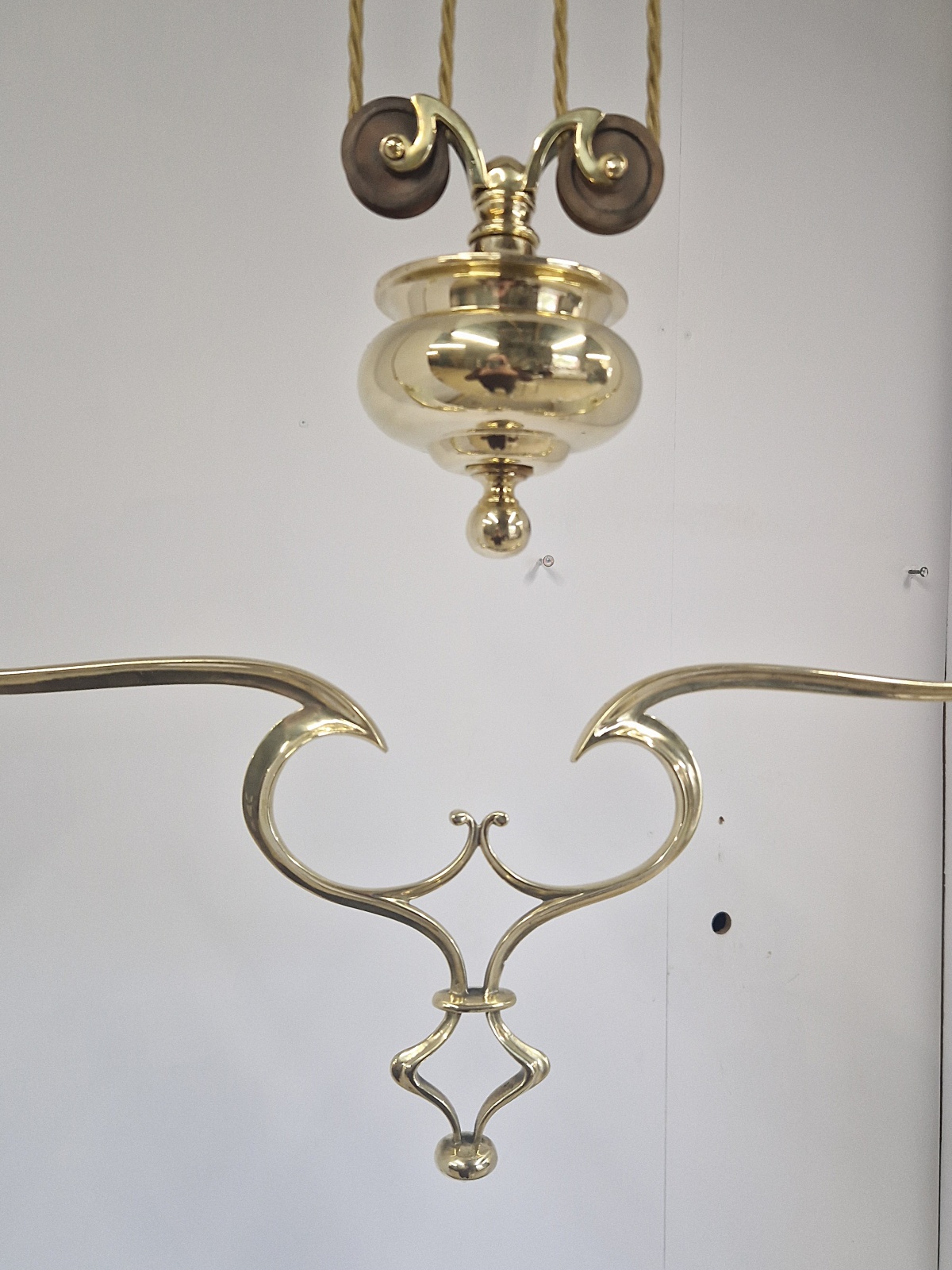
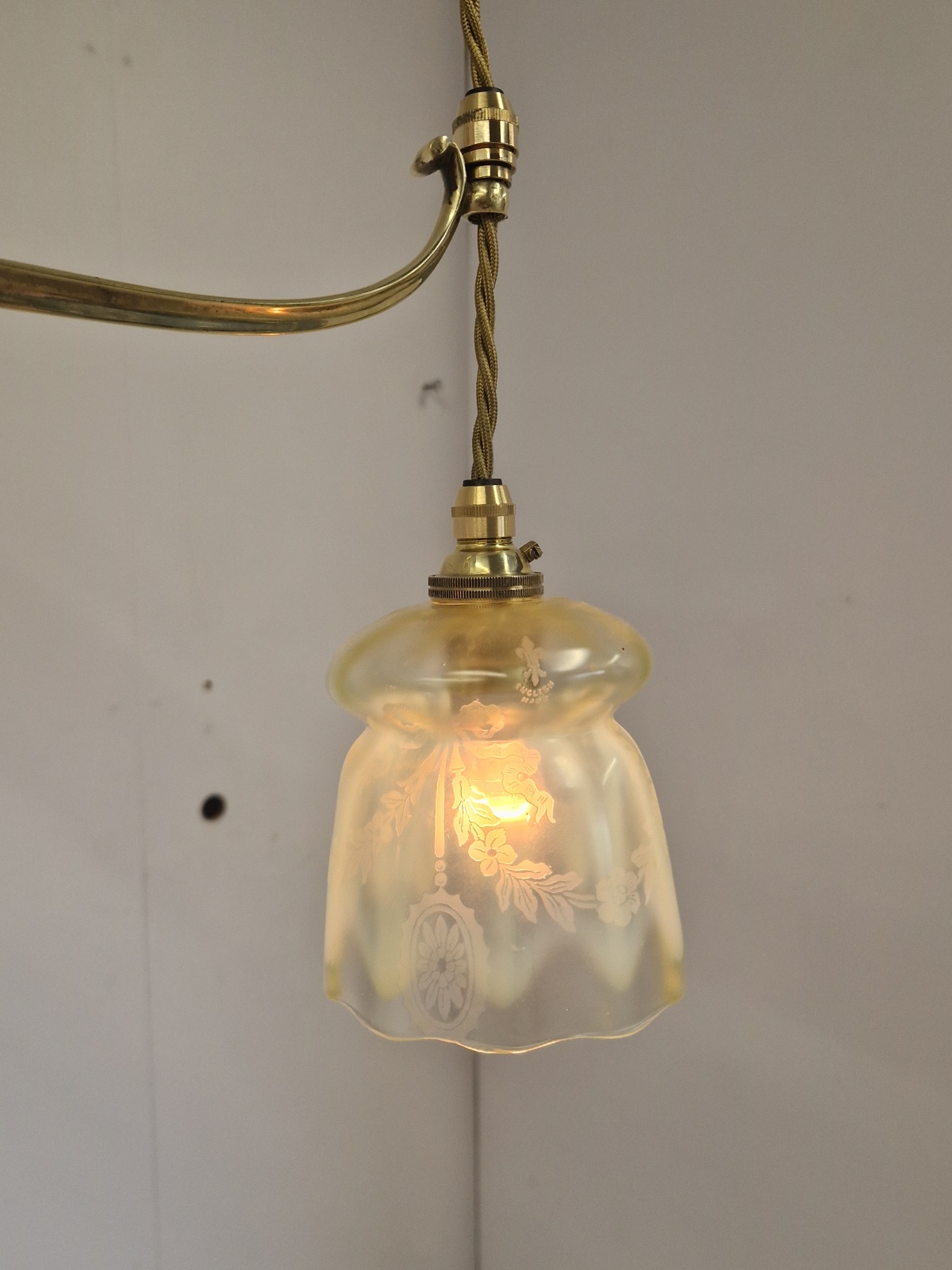
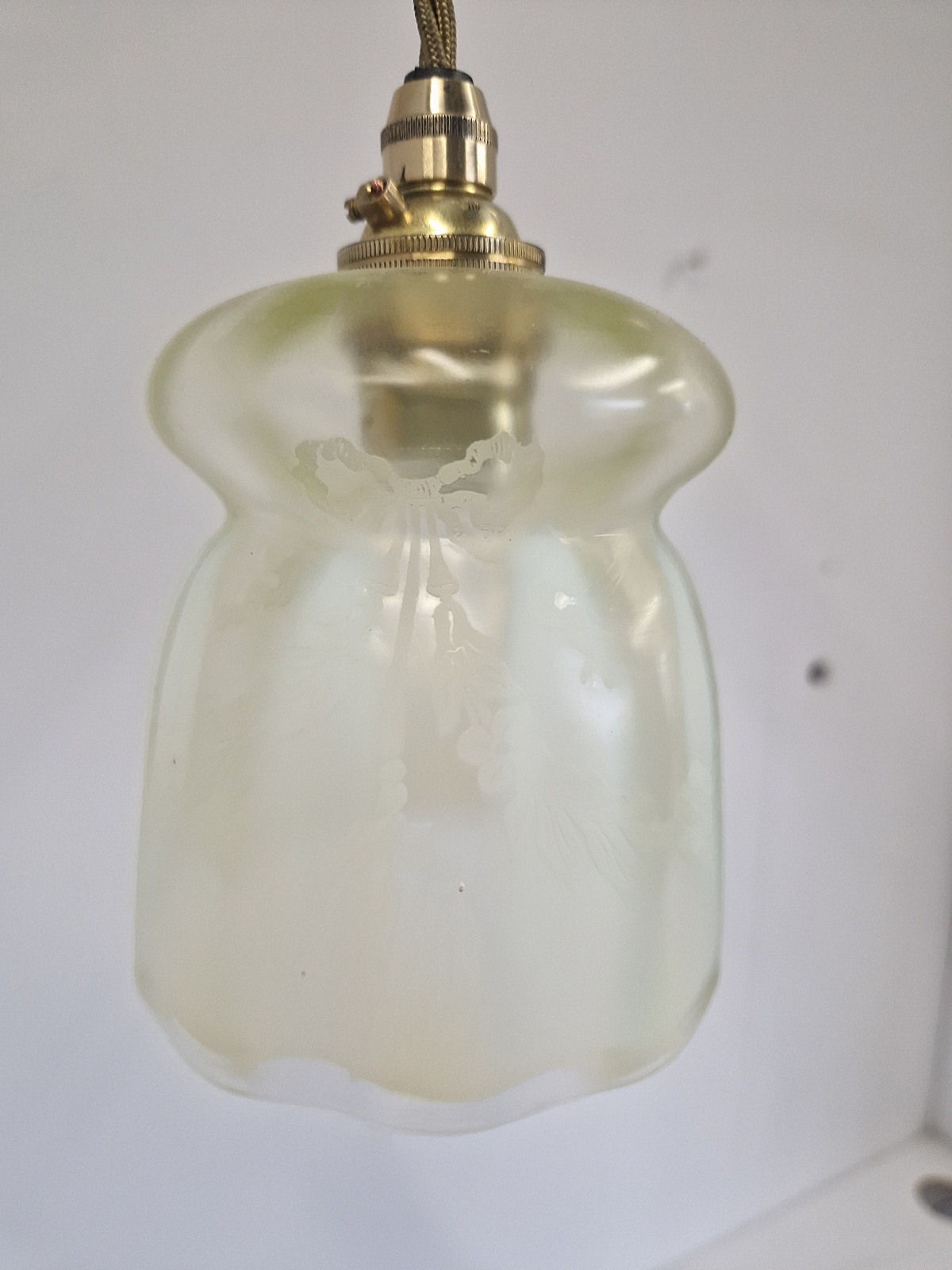

The General Electric Company with John Walsh Walsh | Brass Rise-and-fall Hanging Lamp | England c.1905
£1,595.00
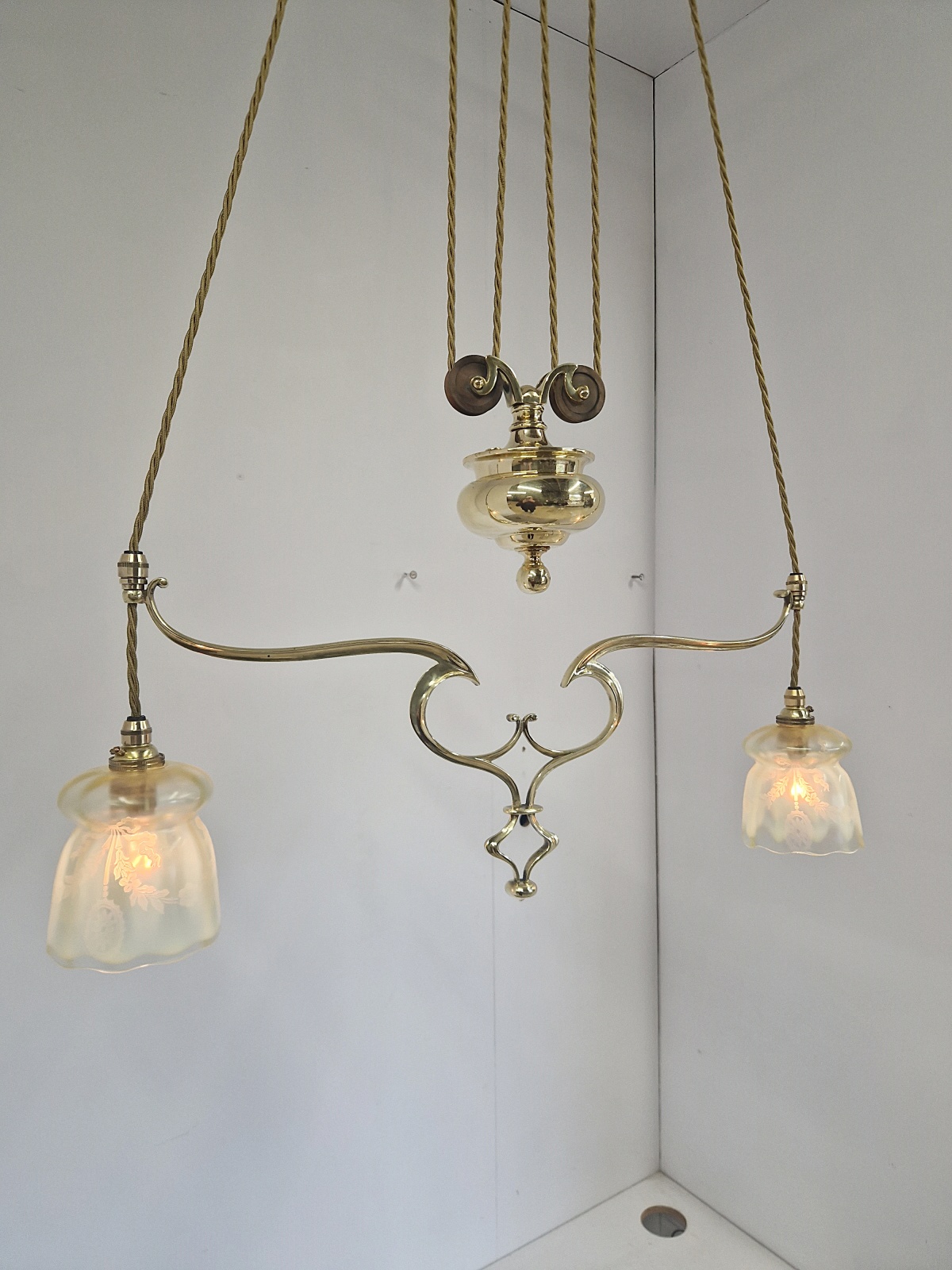
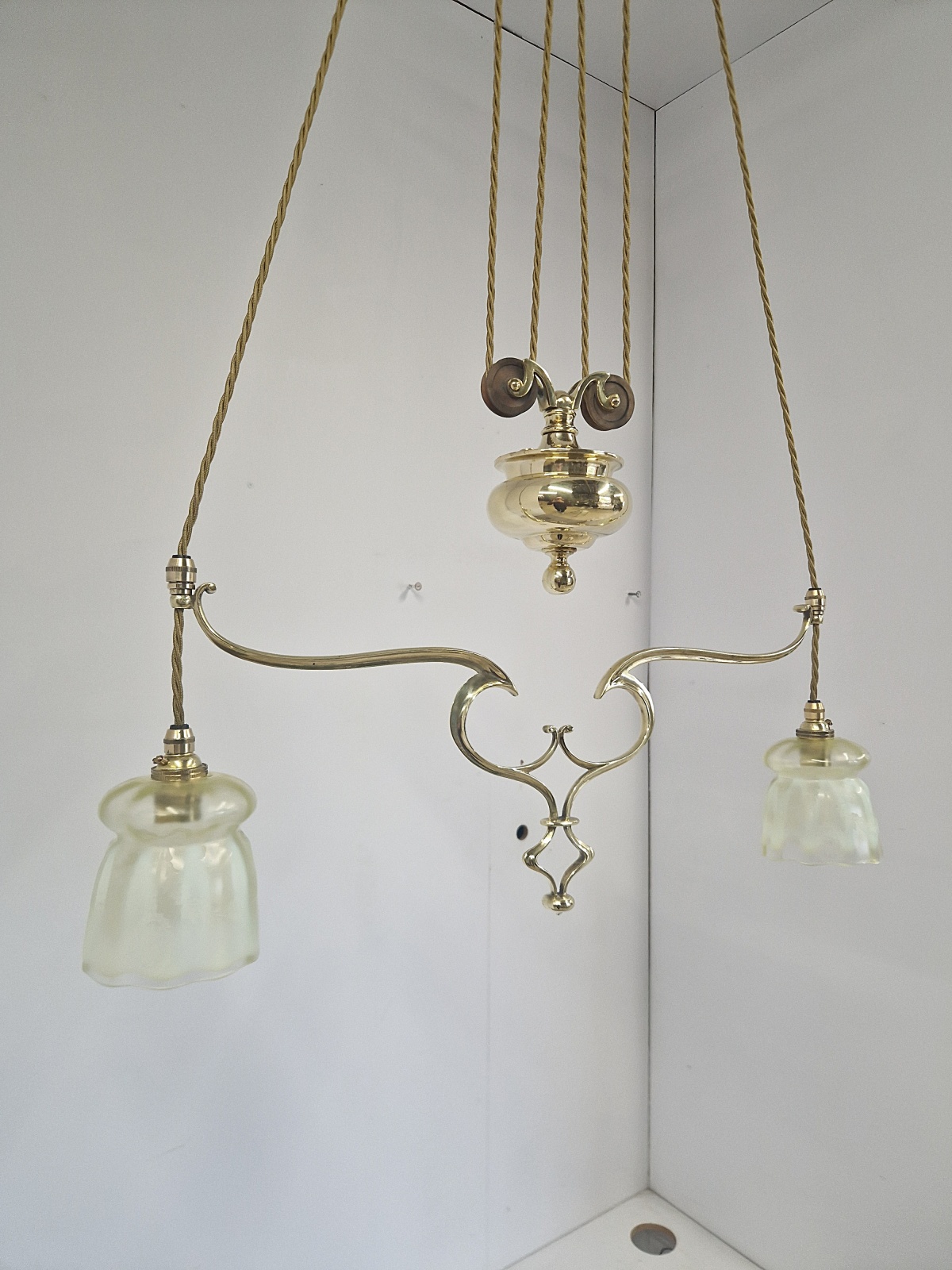
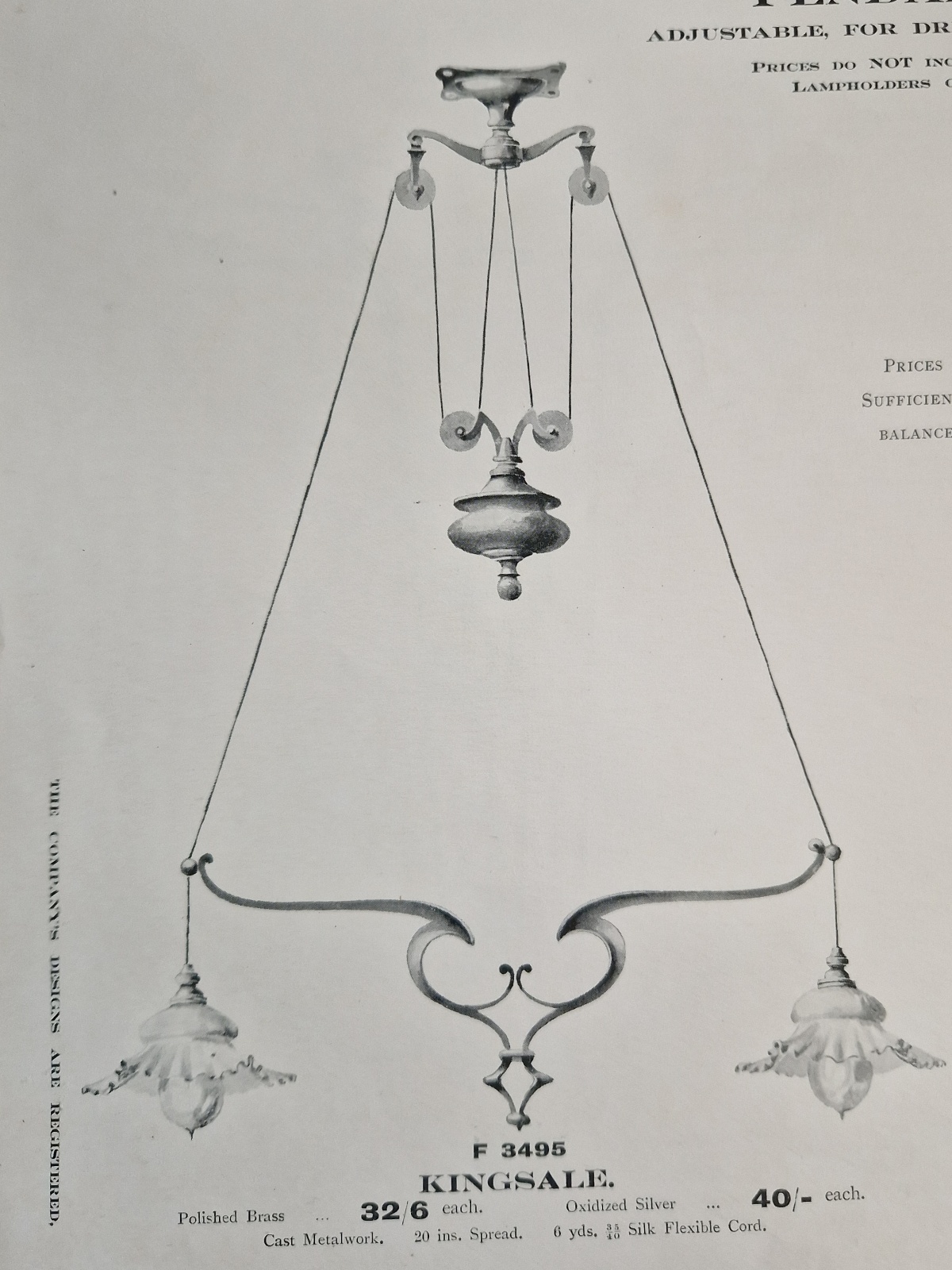
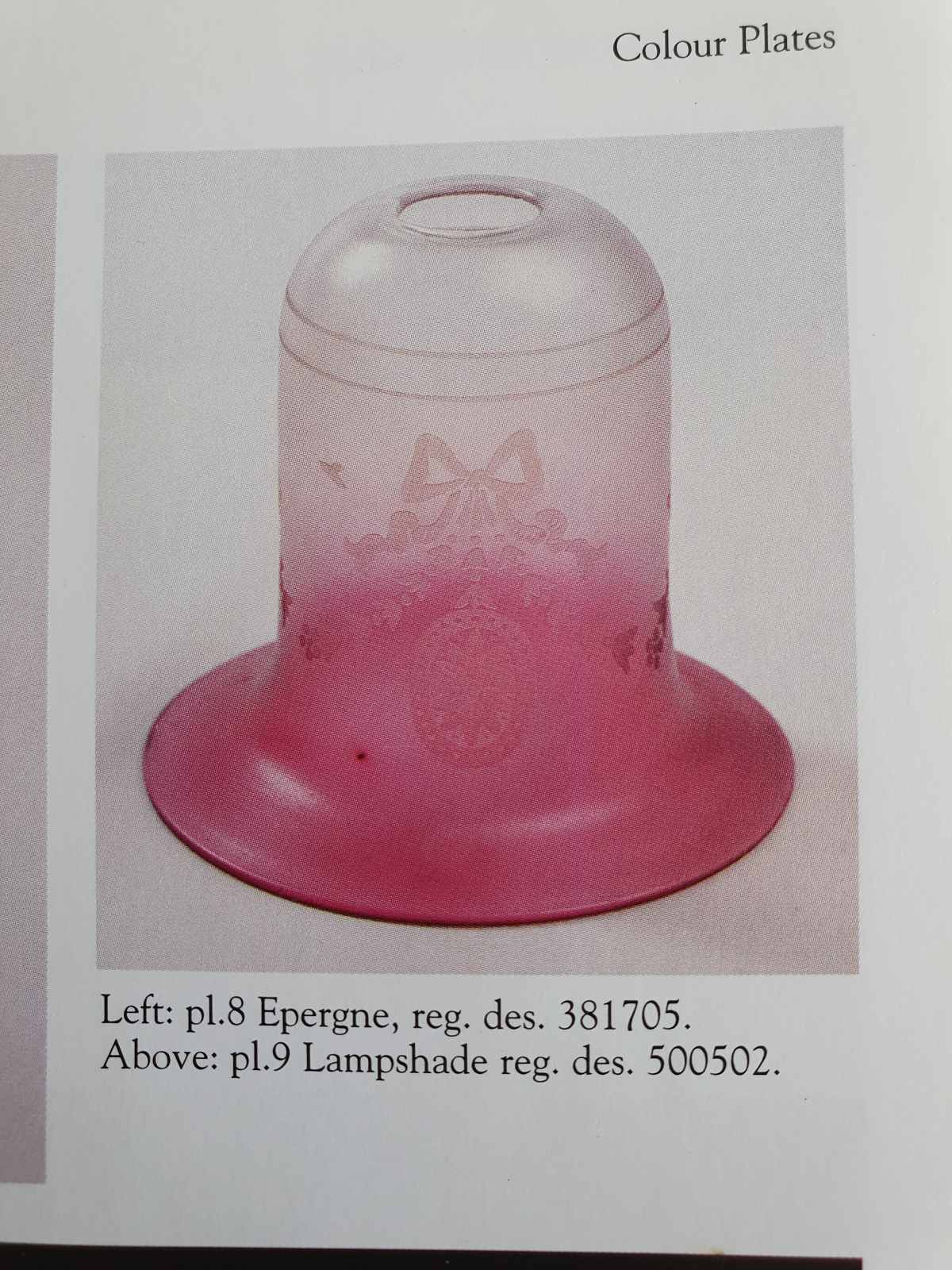
Product Code: LG698.705A good quality brass two arm “rise and fall” dining table hanging light by The General Electric Company in a traditional soft art nouveau style, complimented with a pair of original vaseline-glass lampshades engraved in the registered design of swags and bows produced by John Walsh Walsh. England, c.1905.
Provenance:
- See catalogue photos for both G.E.C light and Walsh Walsh Lampshade pattern
Dimensions/ Specifications:
- Ht.(as displayed)100cm/40in, W.64/25
Not Included:
- 2 x B.22 (4 or 6w) L.E.D candle/golf bulb (Available to purchase in our accessories department)
- Screw fixings
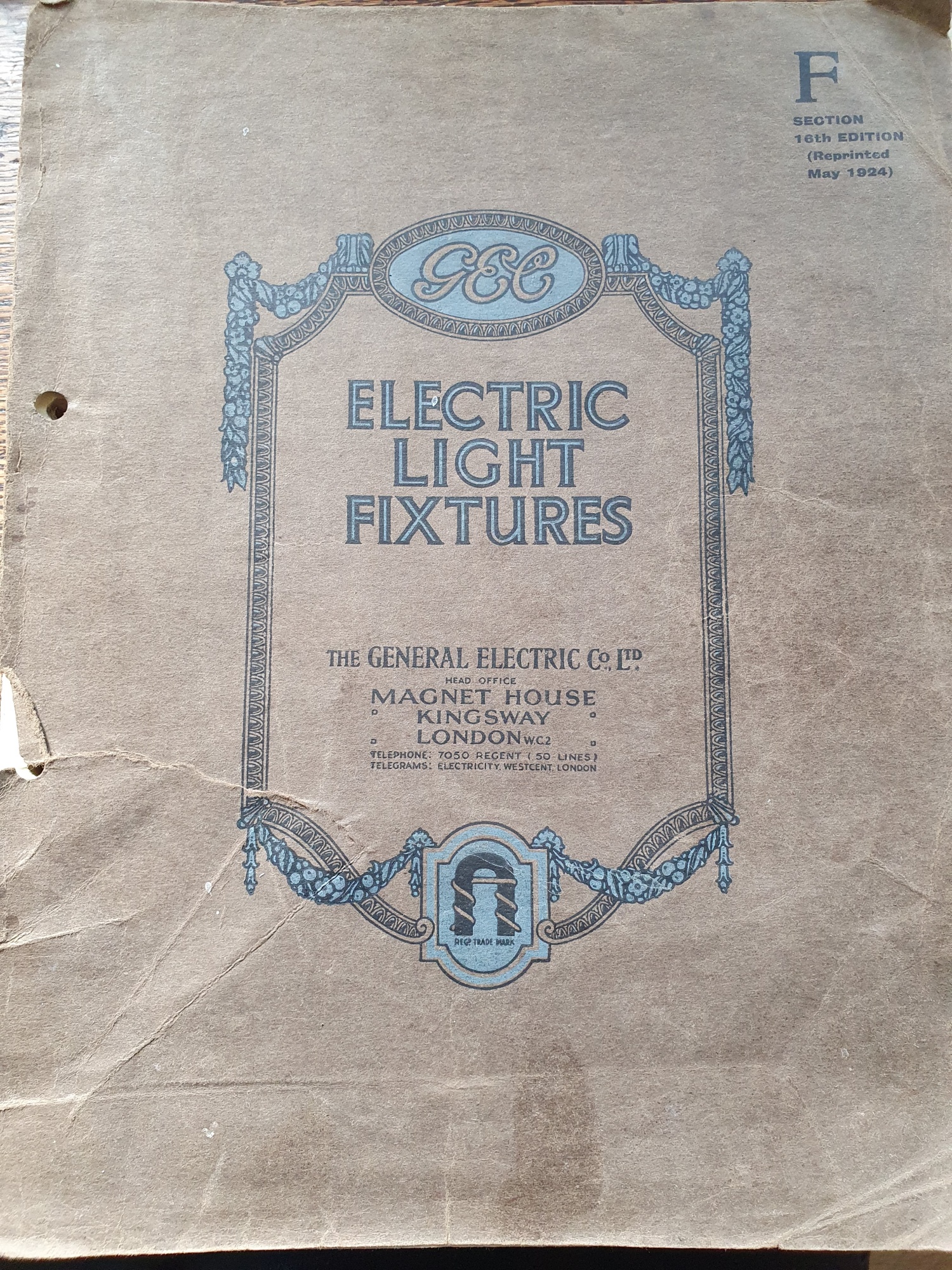
The General Electric Company (G.E.C)
- GEC had its origins in the G. Binswanger and Company, an electrical goods wholesaler established in London in the 1880s by a German-Jewish immigrant, Gustav Binswanger
- 1887 the company published the first electrical catalogue of its kind. The following year, the company acquired its first factory in Salford, where electric bells, telephones, ceiling roses and switches were manufactured.
- In 1889 the company was expanding rapidly, opening new branches and factories and trading in ‘everything electrical’, a phrase that was to become synonymous with GEC.
- In 1893, it decided to invest in the manufacture of lamps. The company was to lead the way in lamp design, and the burgeoning demand for electric lighting was to make GEC’s fortune.
- In 1902, its first purpose-built factory, the Witton Engineering Works, was opened near Birmingham.
- The company expanded both at home and overseas, with the establishment of agencies in Europe, Japan, Australia, South Africa, and India. It also did substantial trade with South America.
John Walsh Walsh (1850–1951)
Soho Glassworks & Vesta Glassworks (Lodge Road, Birmingham)
- John Walsh Walsh is considered one of Britain’s most influential glass manufacturing companies outside the Stourbridge Glass Quarter
- 1850: Birmingham entrepreneur John Walsh Walsh purchased the established Soho Glassworks on Lodge Road to produce his own soda water bottles.
- 1864: The founder John Walsh Walsh passed away, leaving the enterprise to be split among his children.
- 1879–1882: Following a family buyout, control transitioned to Walsh’s daughter Ellen and her husband Thomas Walker. They hired Lewis John Murray as manager, shifting production toward high-end cut crystal and art glassware.
- 1897: The company formally launched its highly iconic “New Opaline Brocade” range, which became heavily sought after for Art Nouveau lighting shades
- 1923: The factory site officially adopted the dual moniker of the Soho and Vesta Glass Works.
- 1926 (23 June): The iconic “WALSH” trademark was legally registered to combat cheap imitation imports from continental Europe.