
John Walsh Walsh for Veritas-Efesca Works | 2 Similar Cut-glass Plafonniers | England c.1925-35
Price range: £1,295.00 through £1,495.00
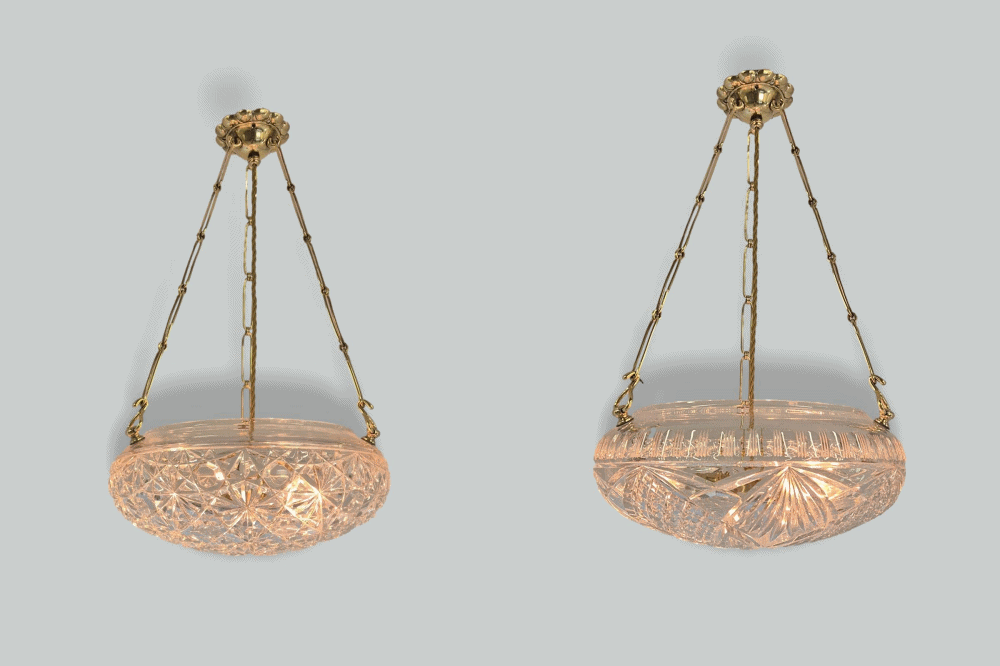
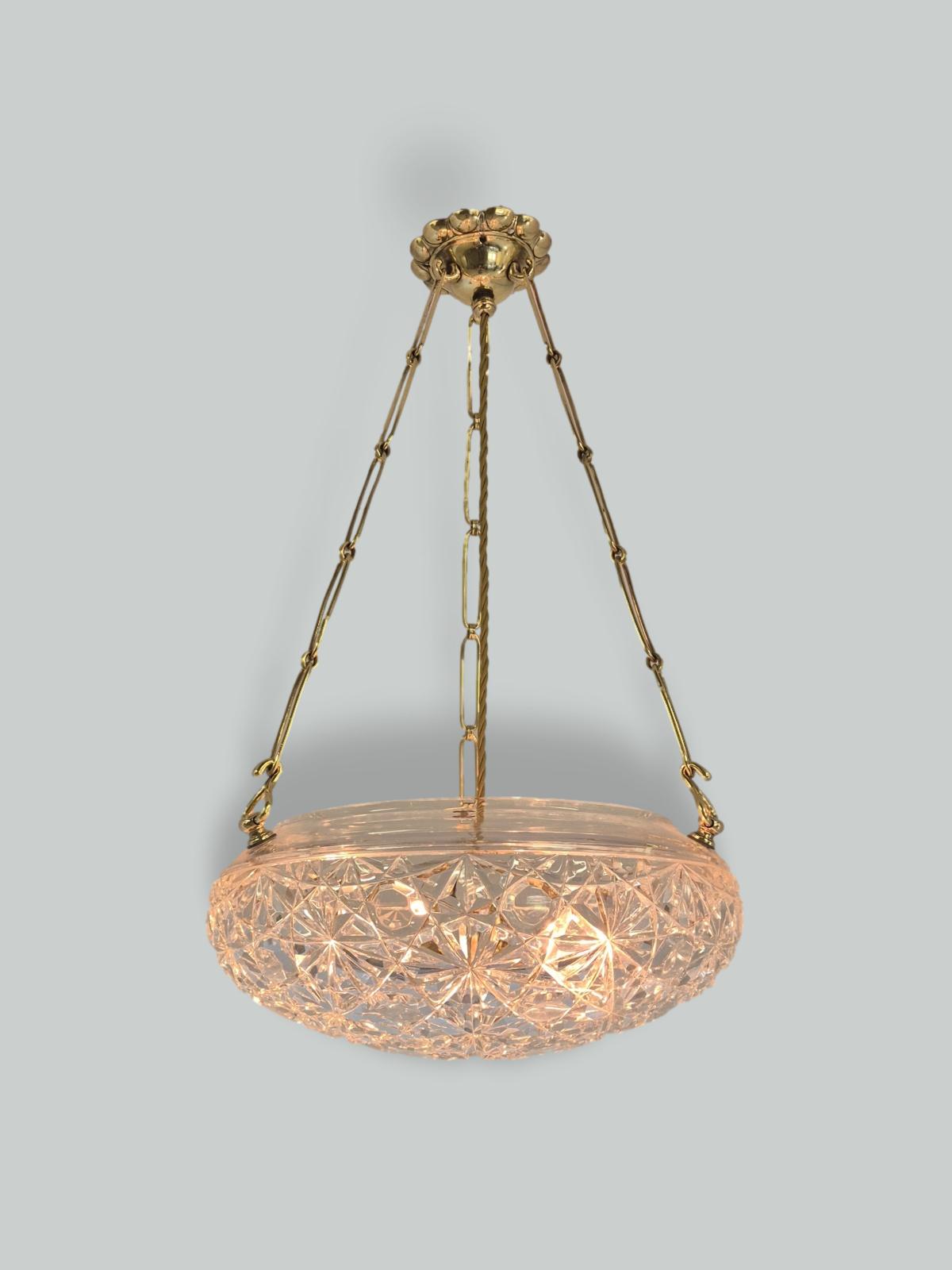
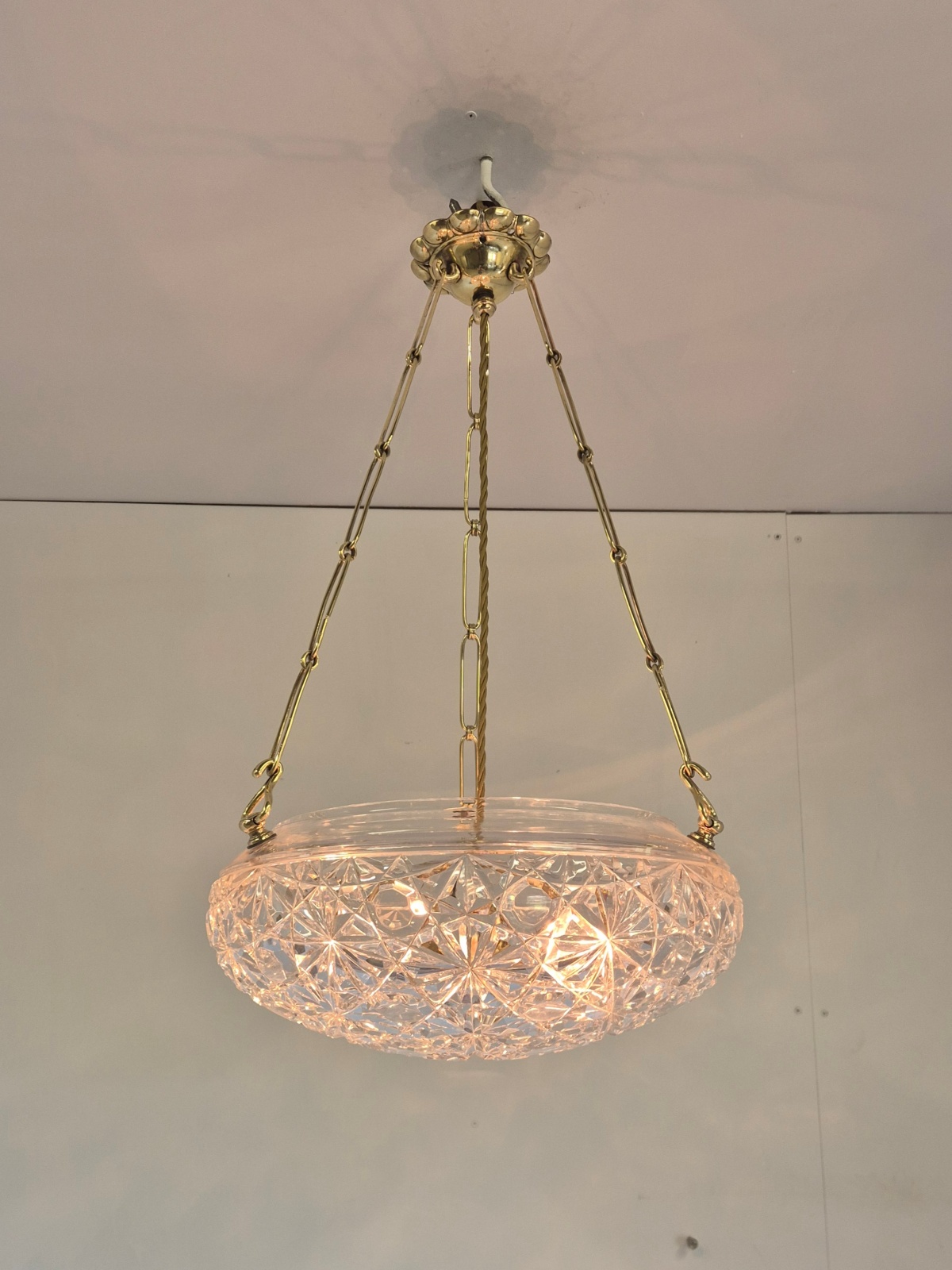
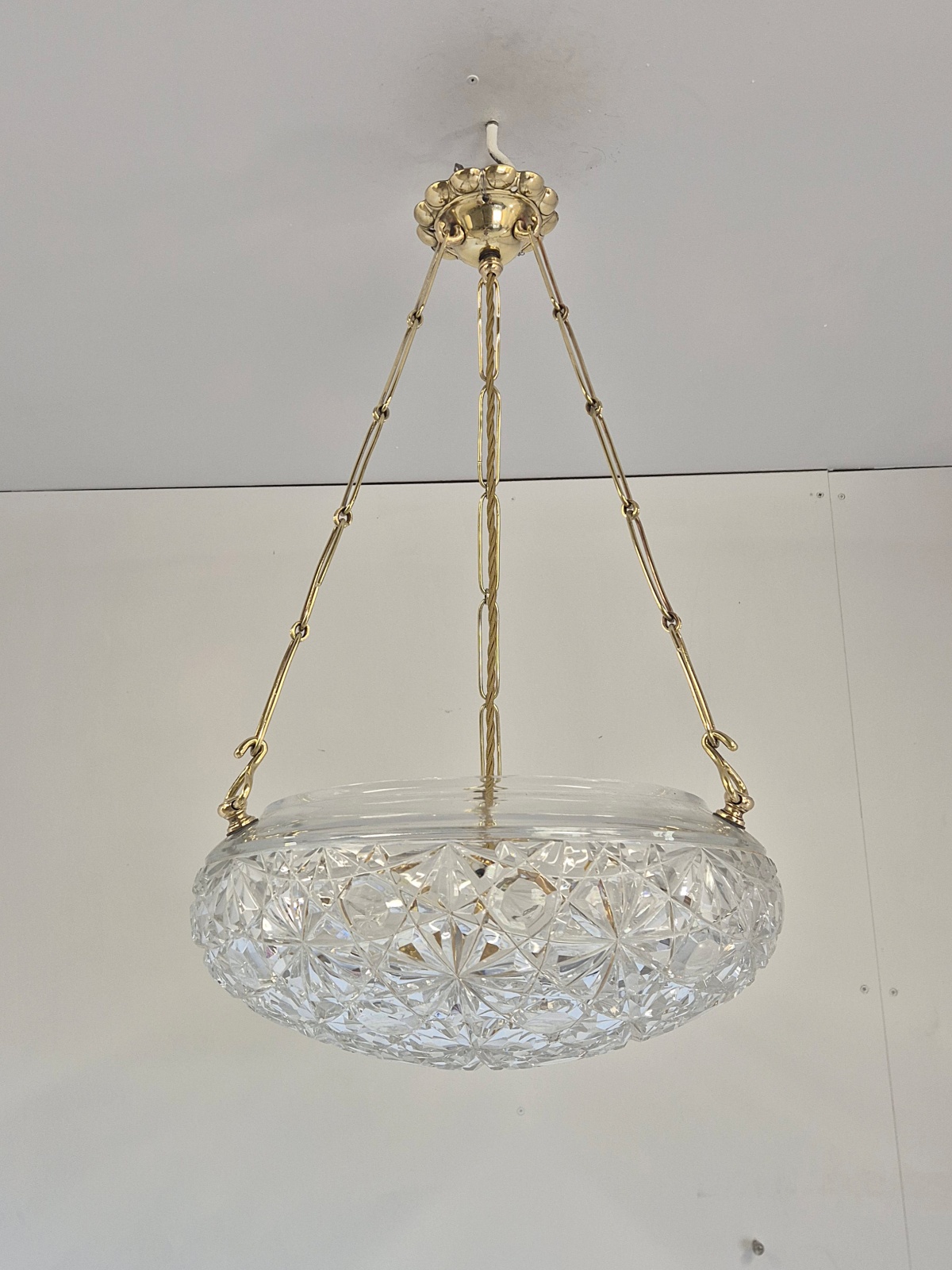
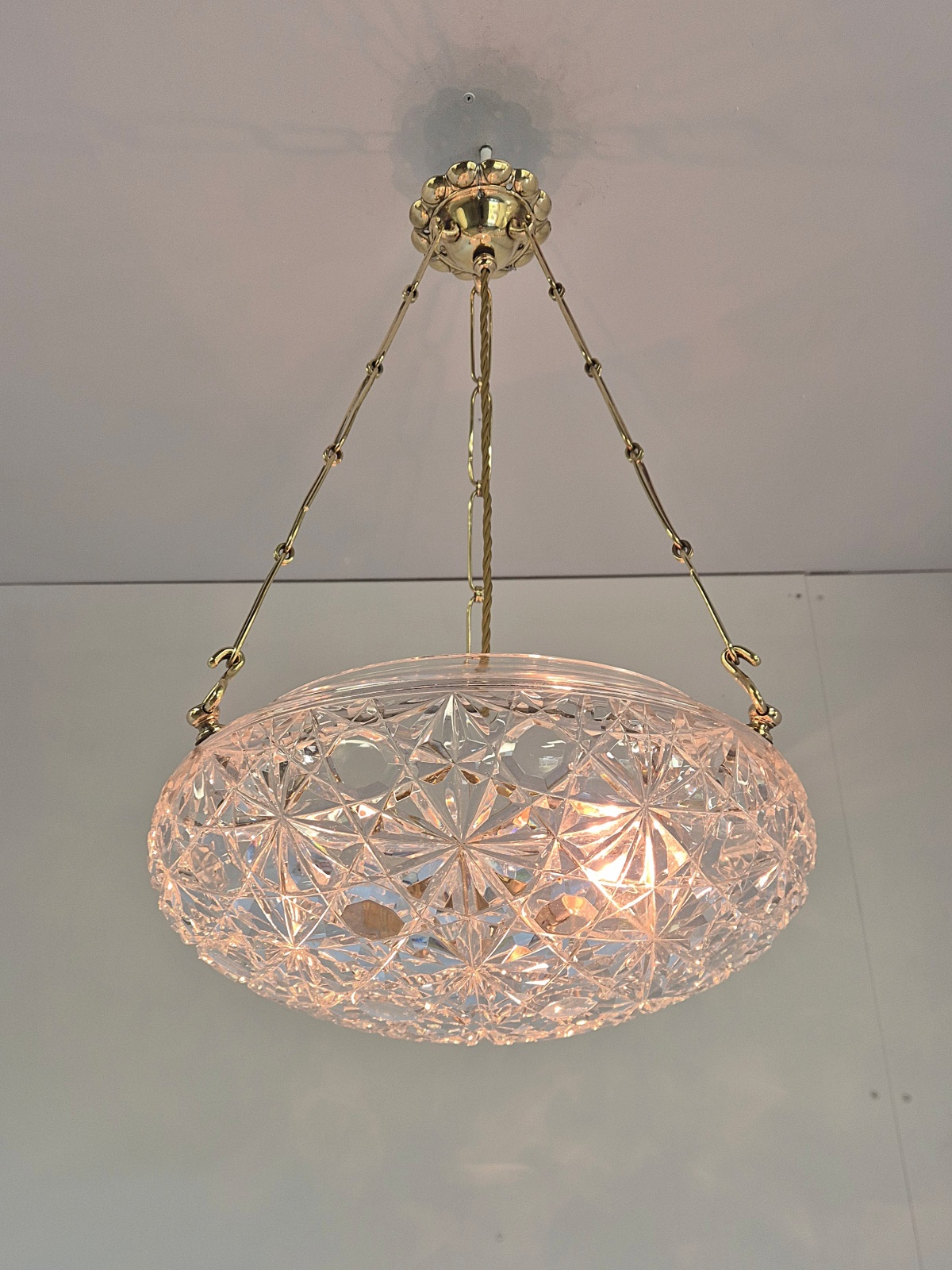
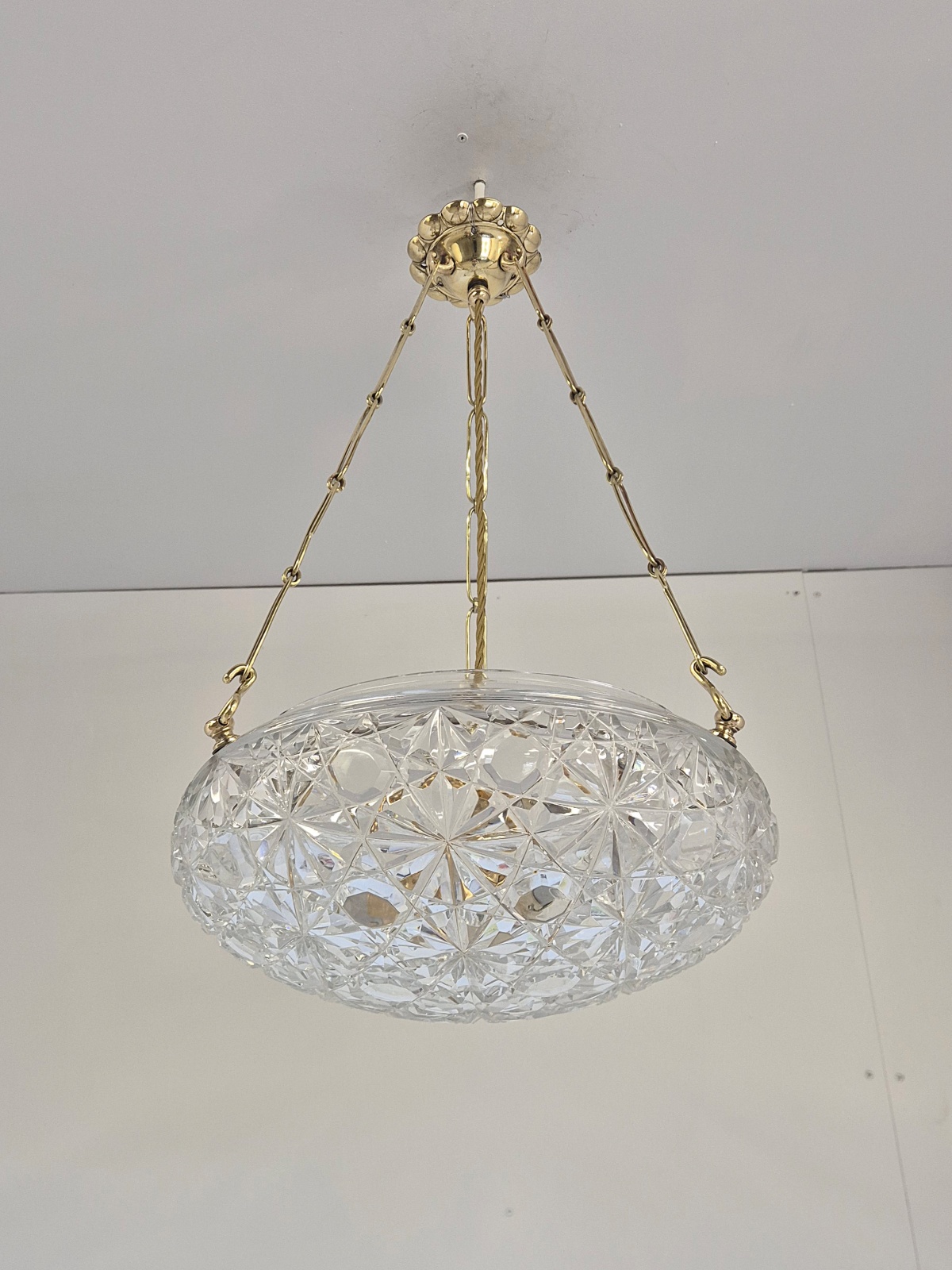
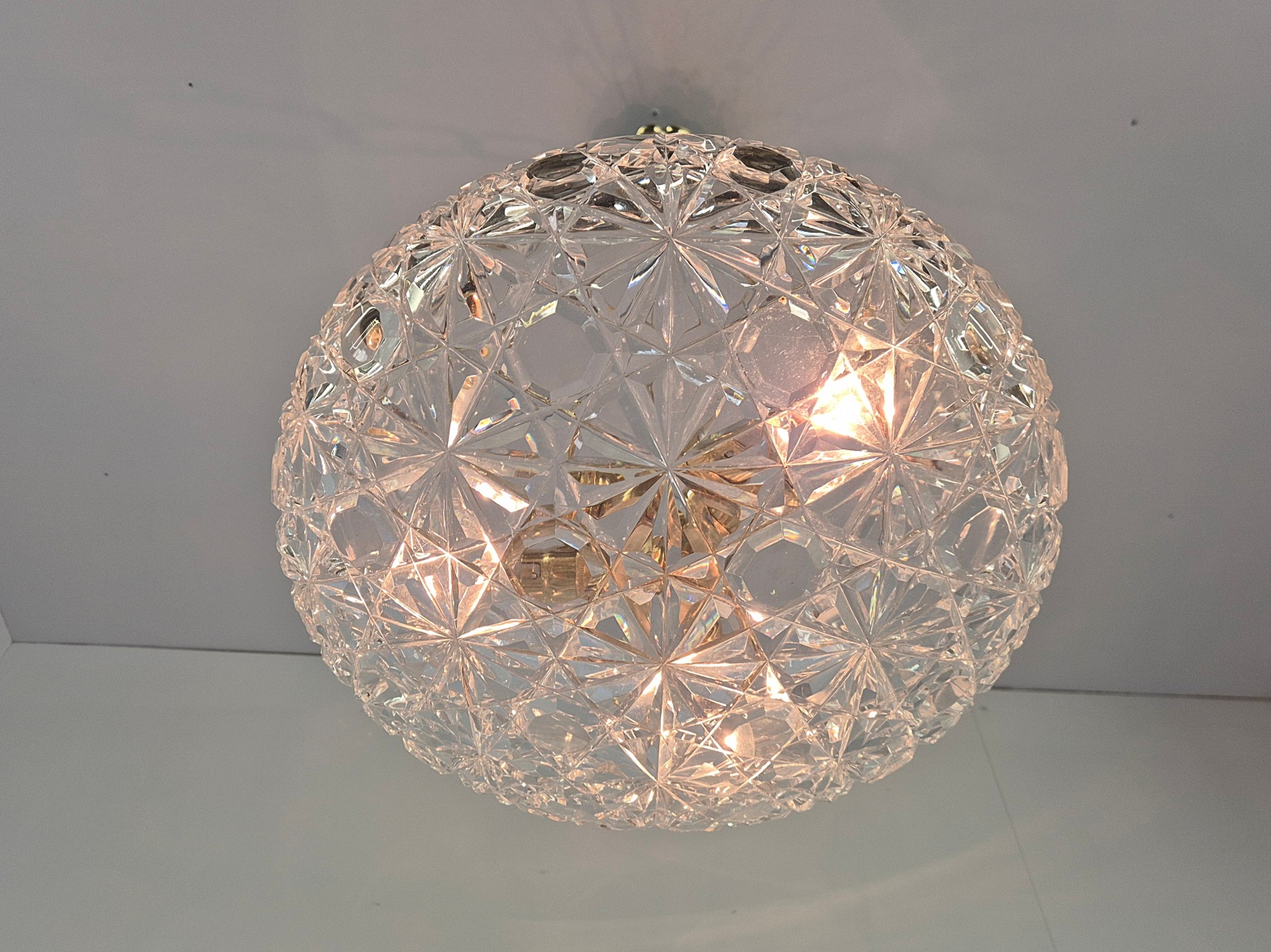
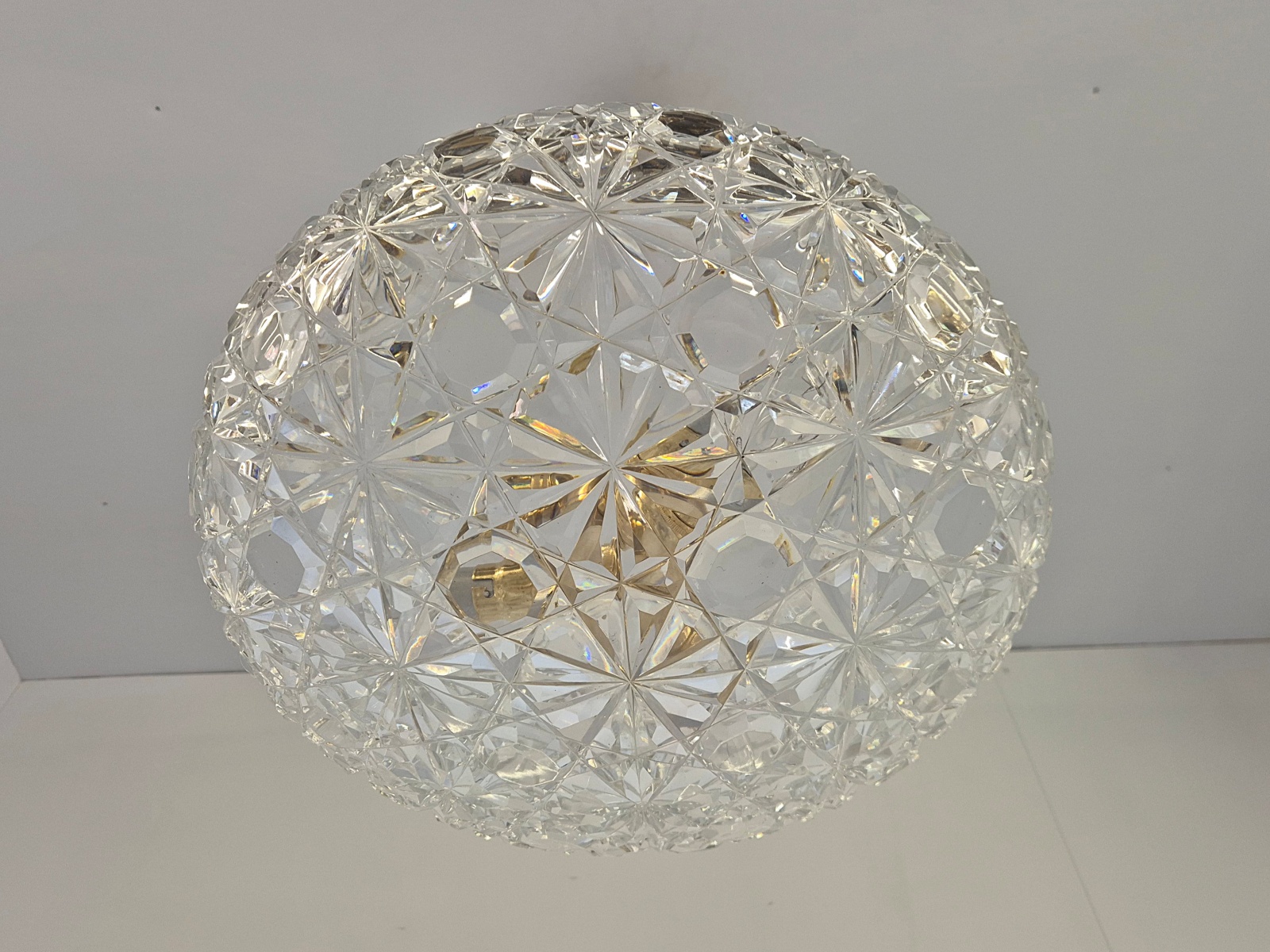
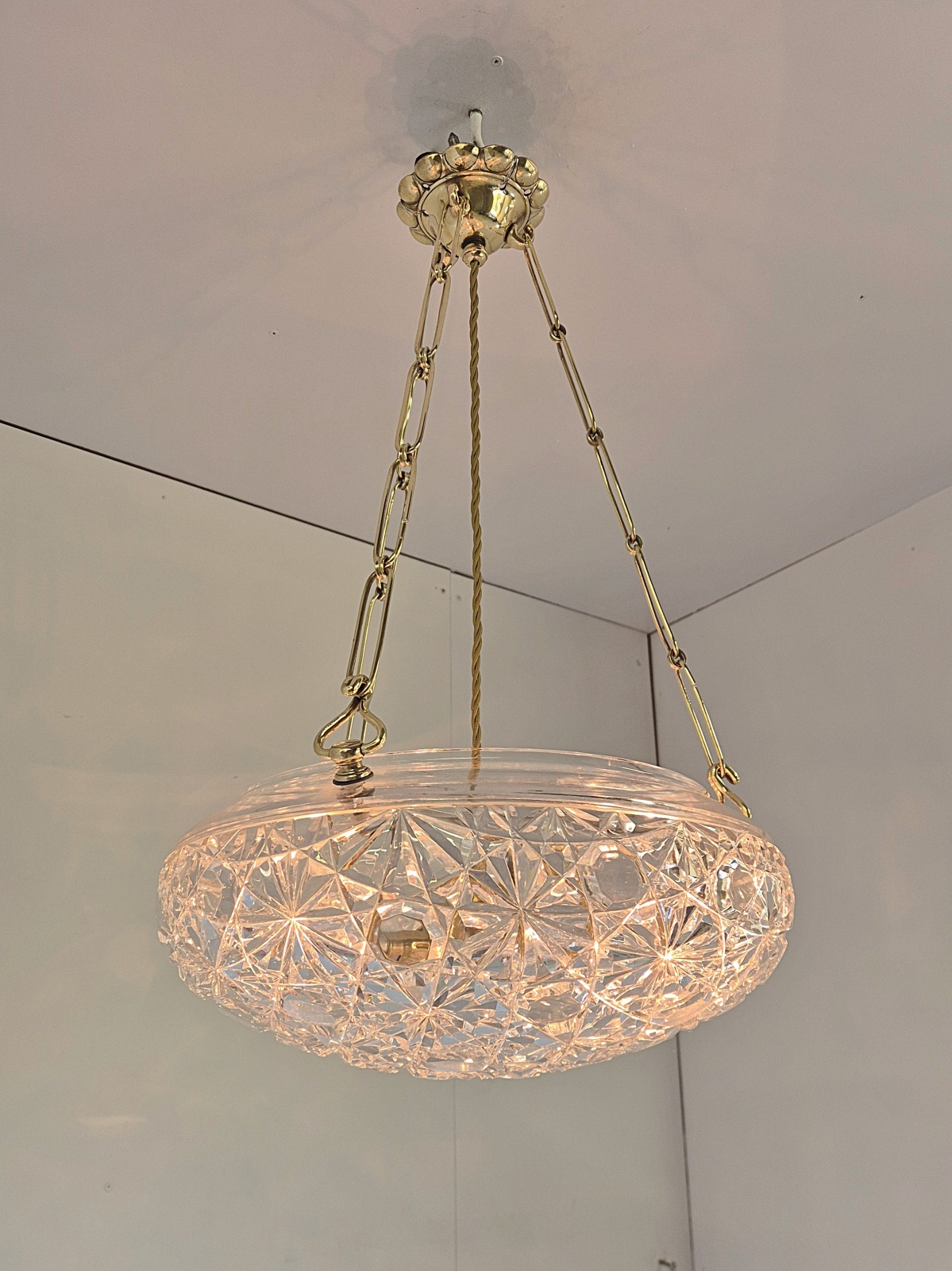
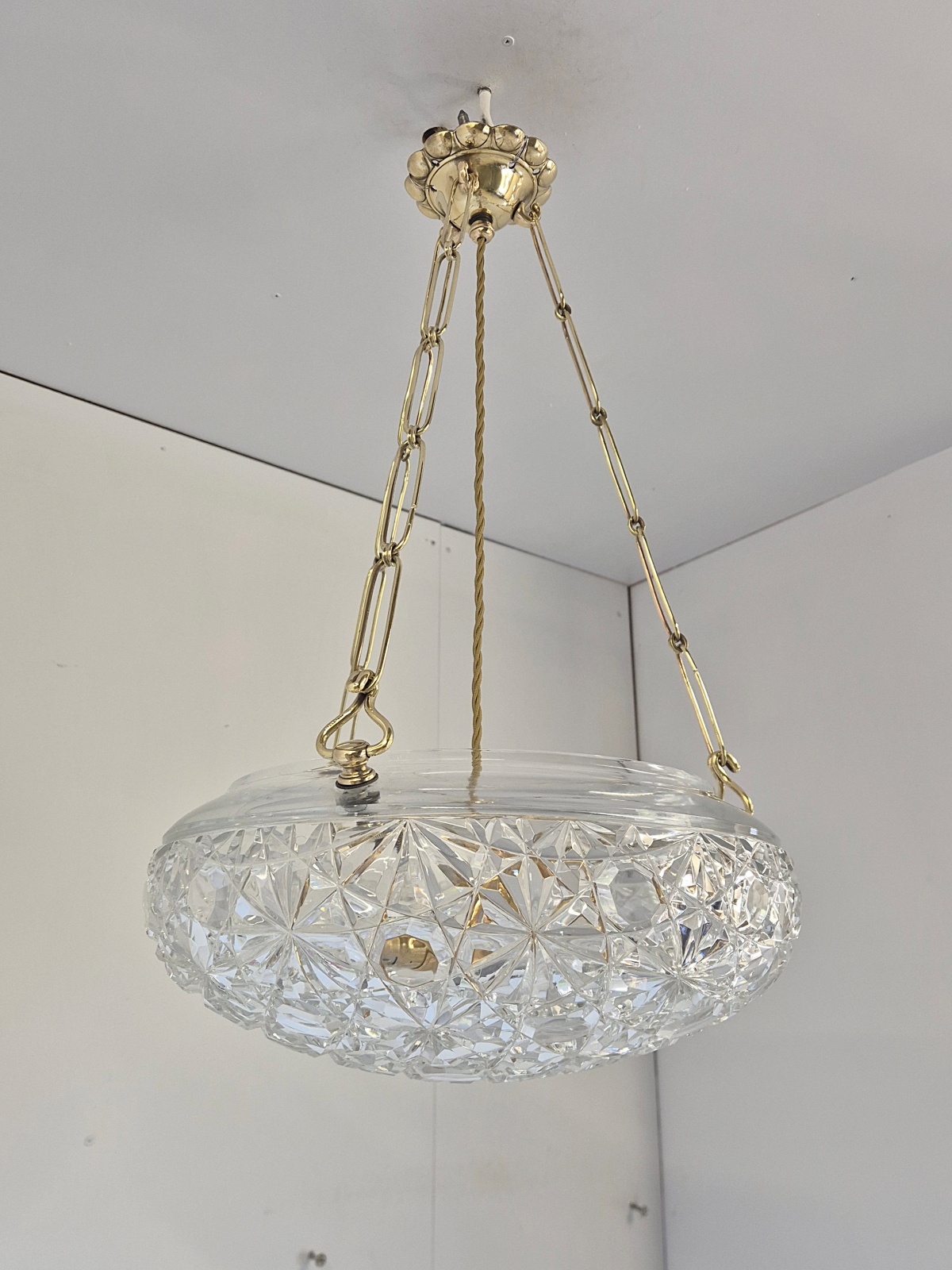
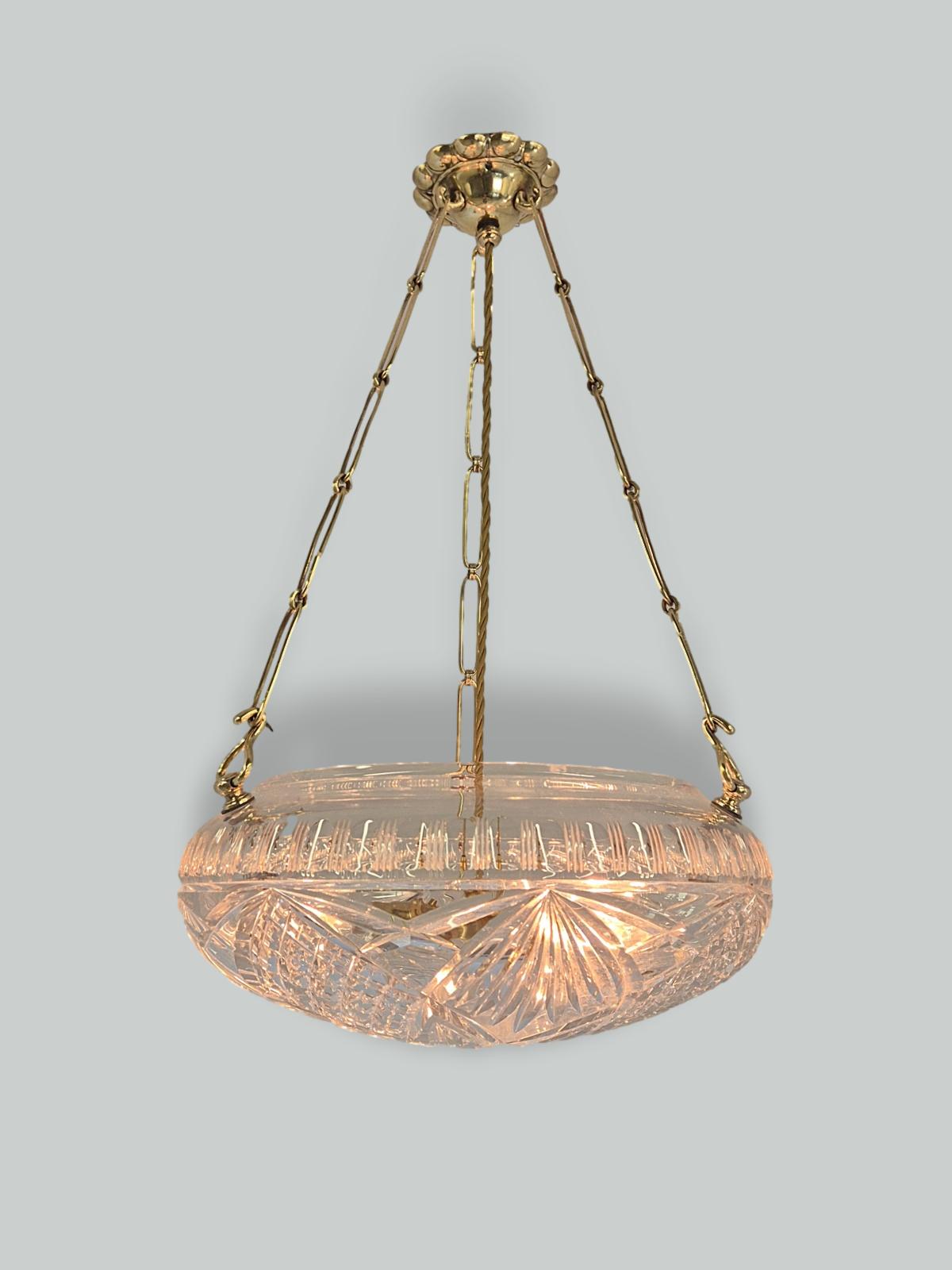
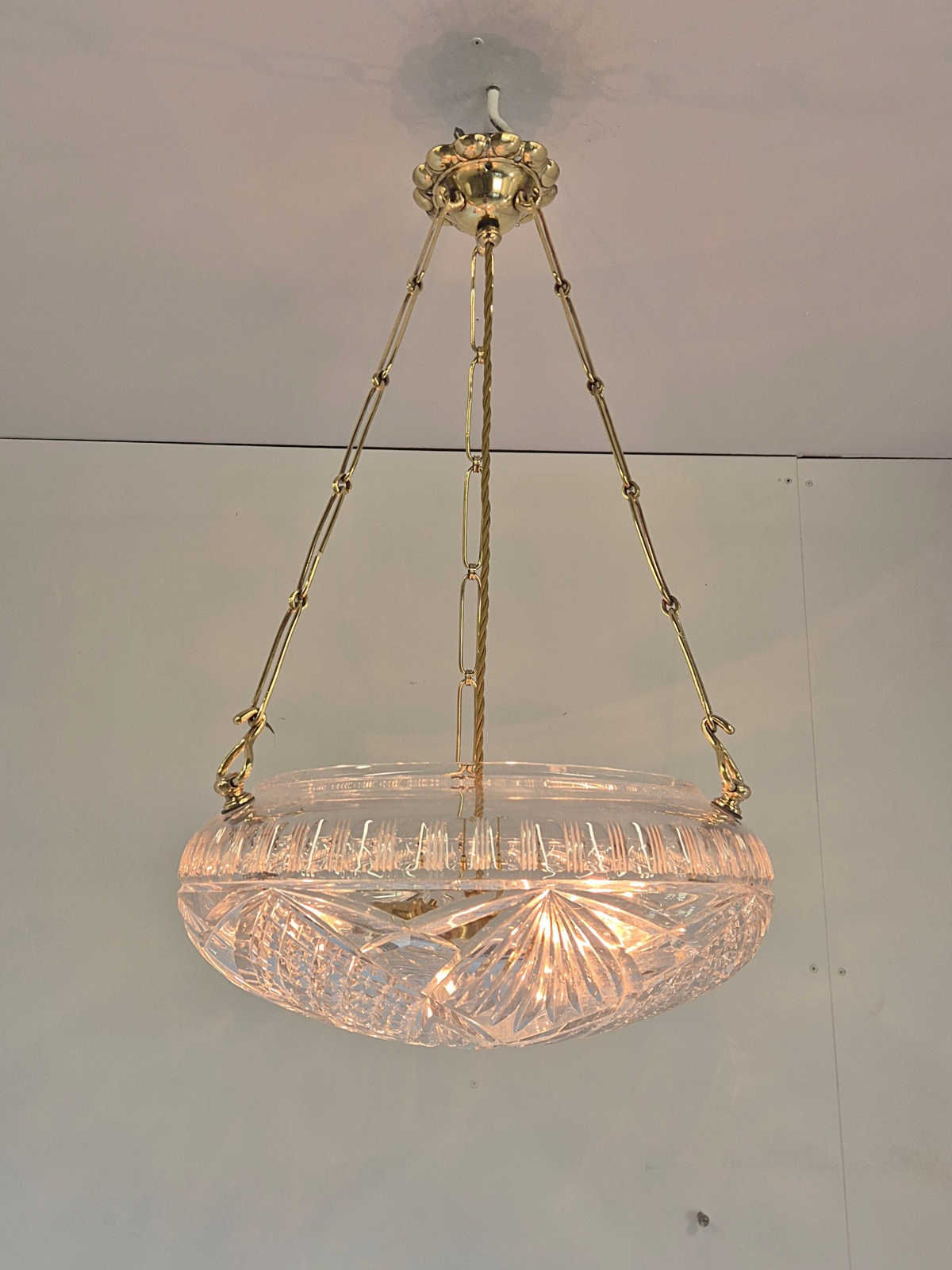
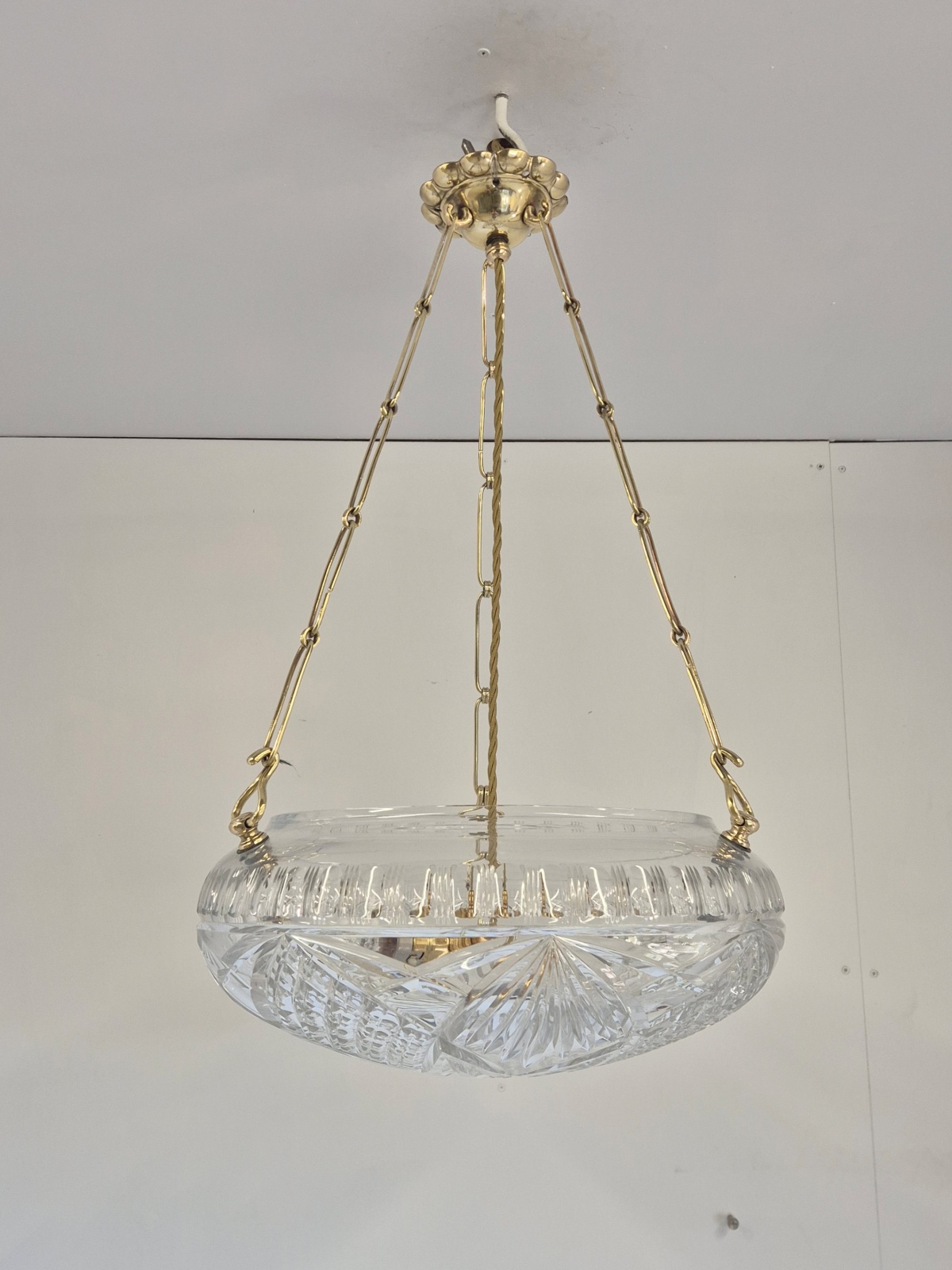
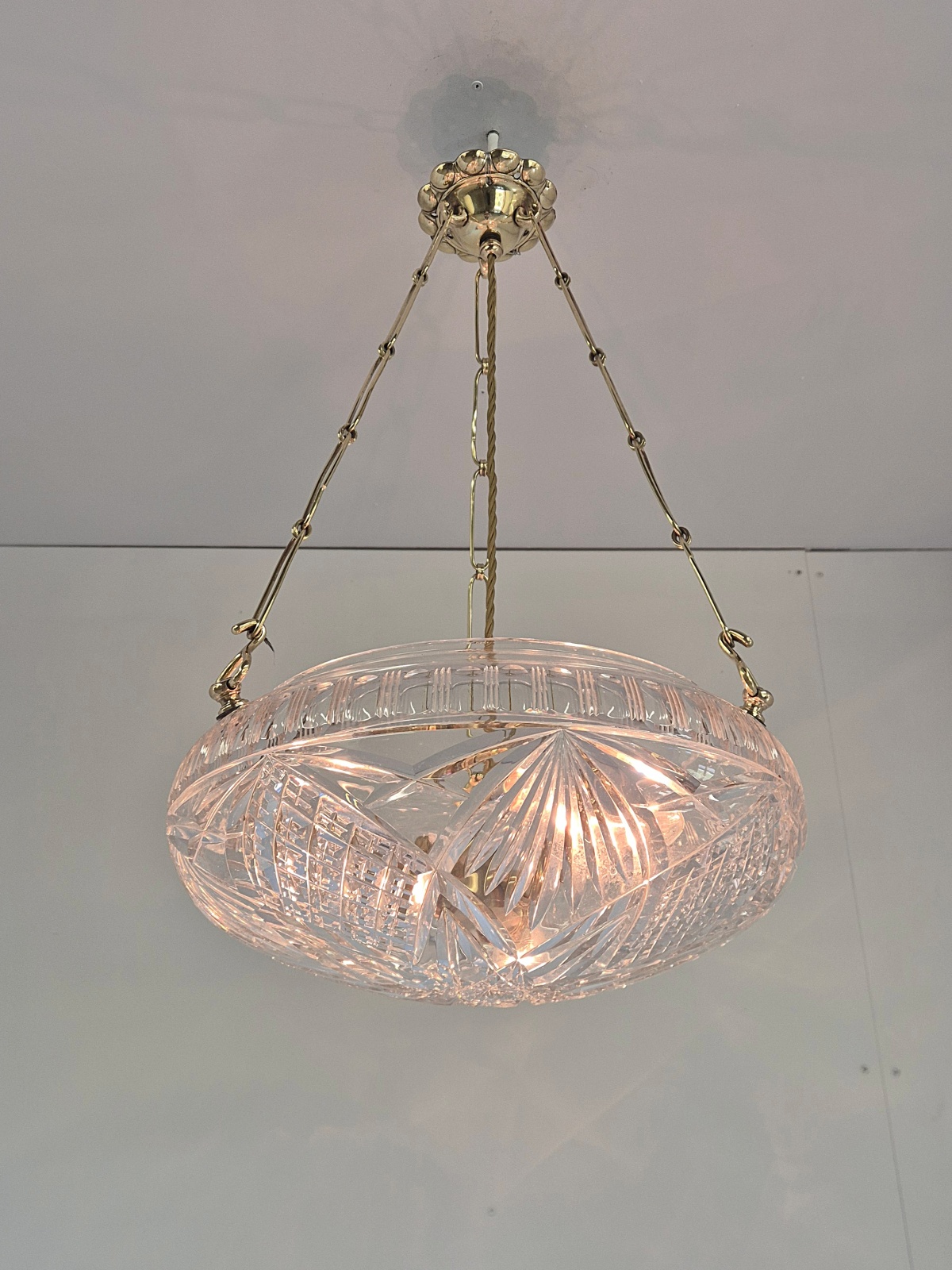
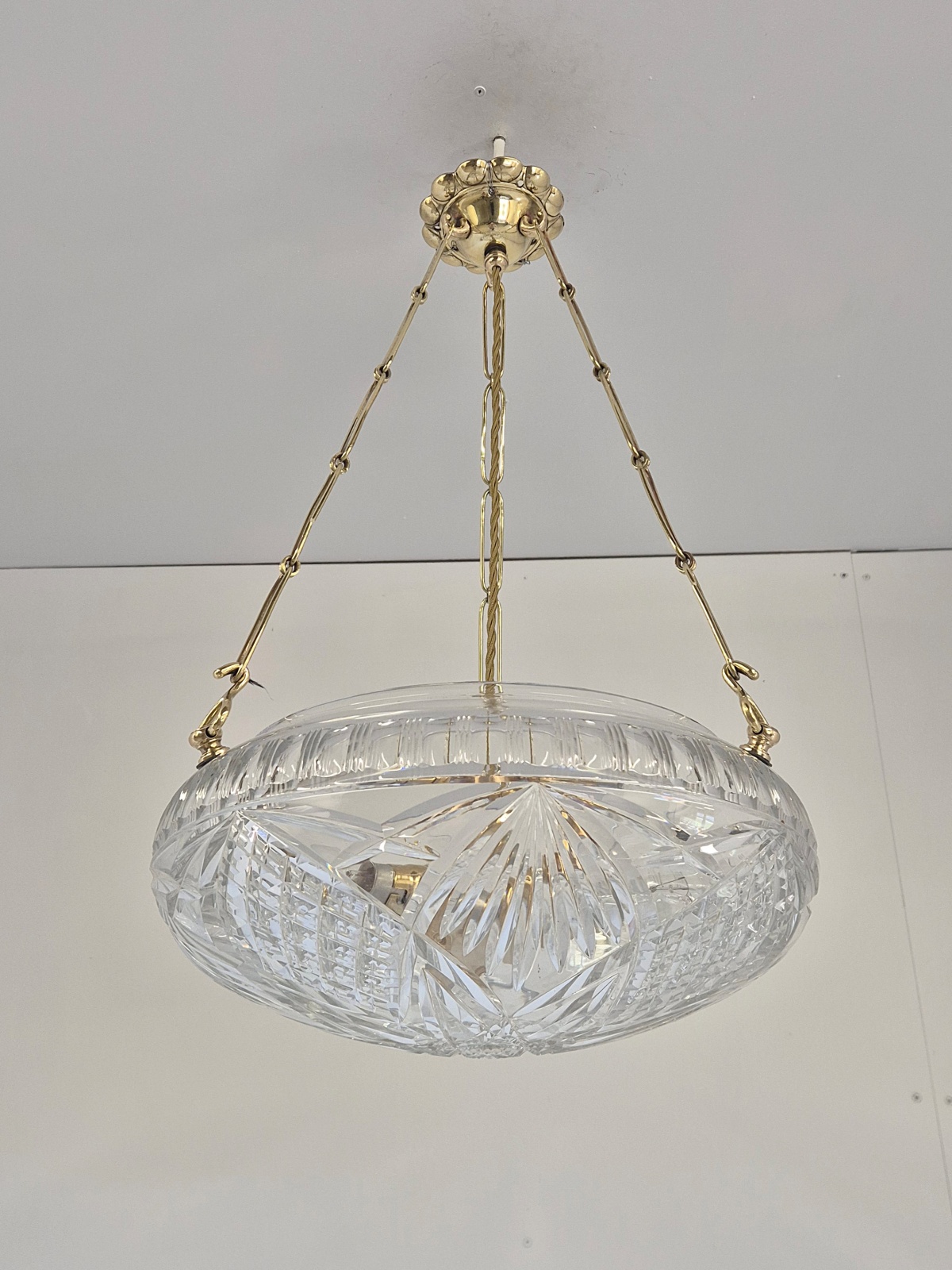
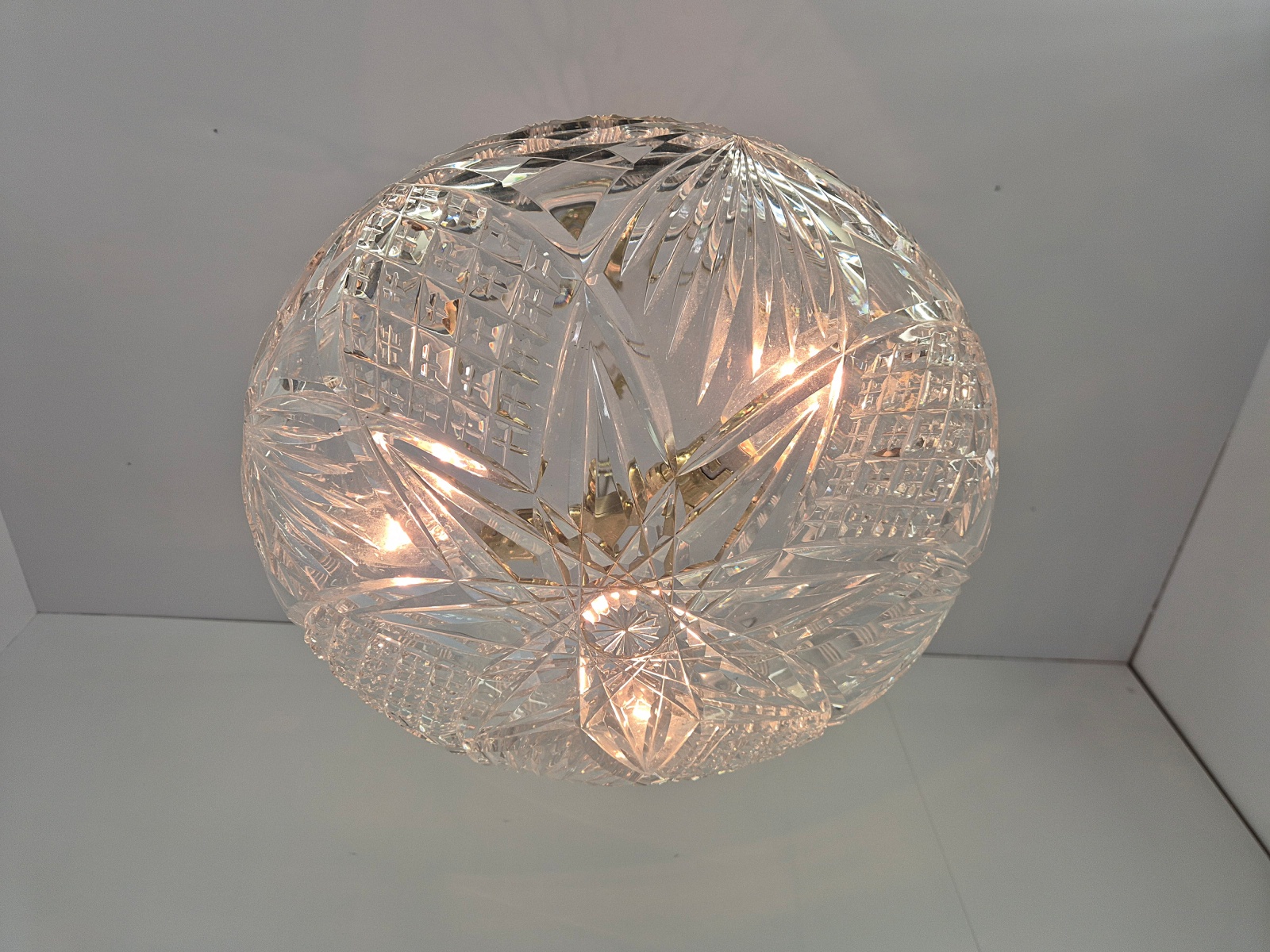
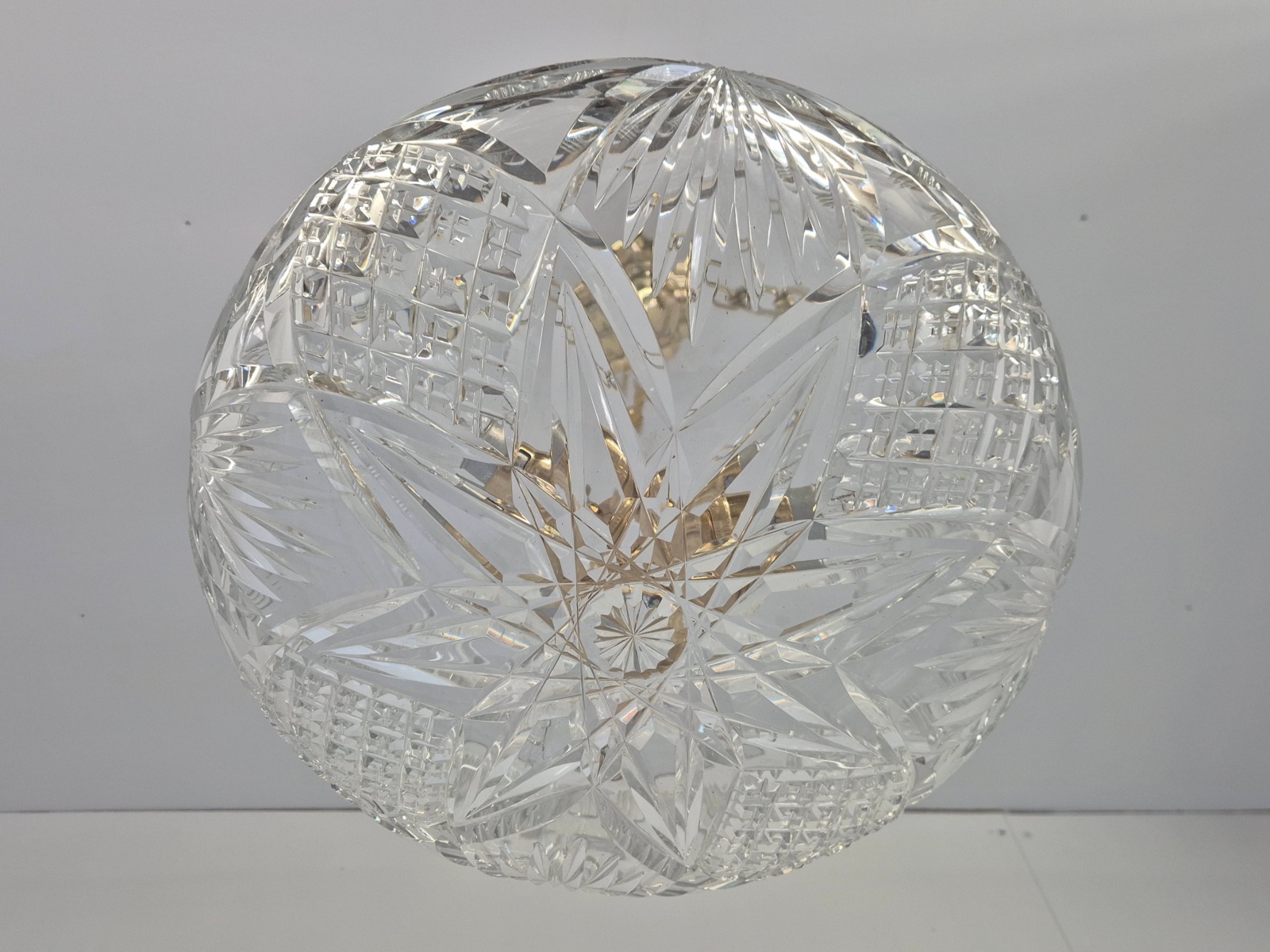
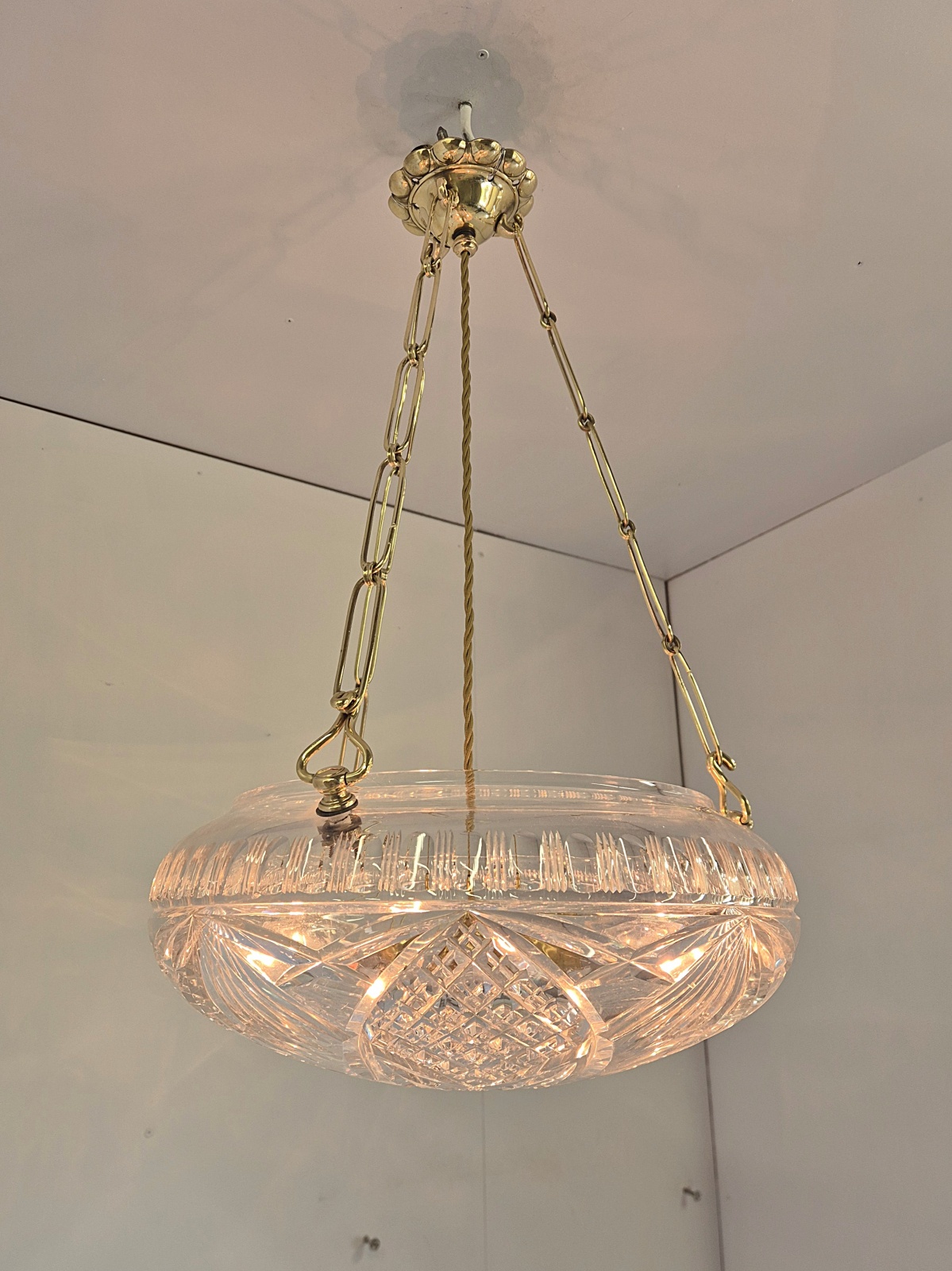
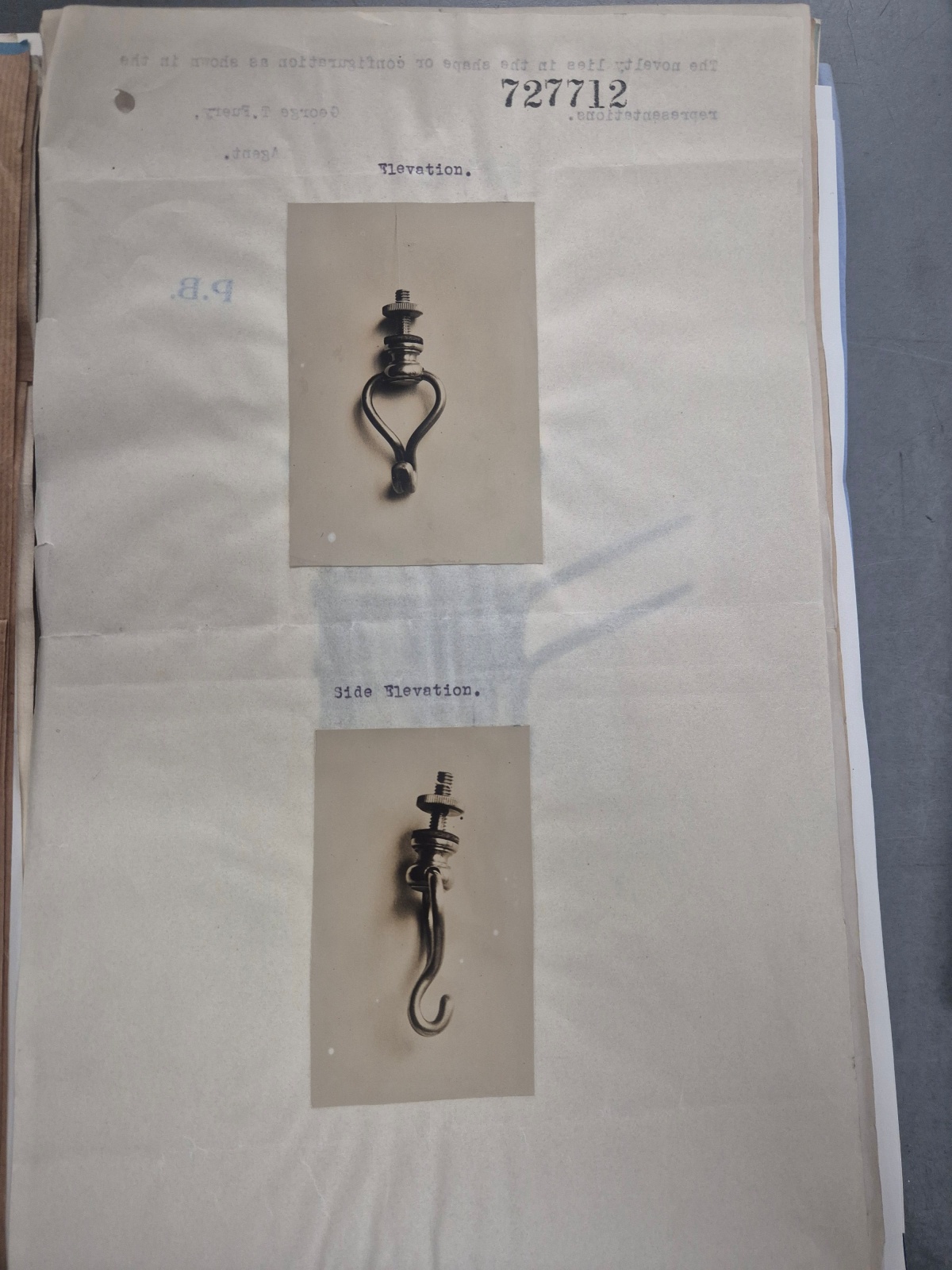
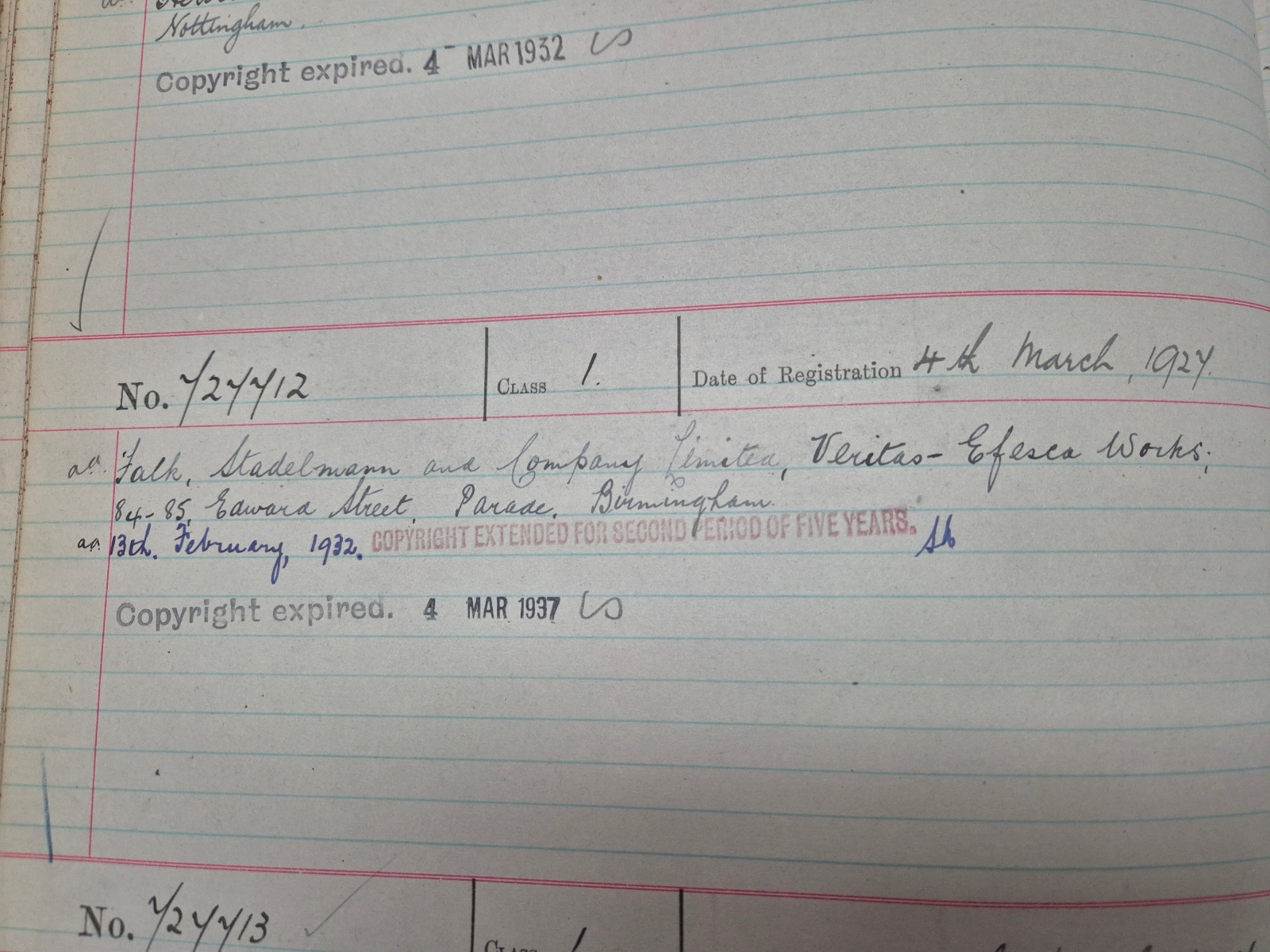
Product Code: LG742.7432 very good quality cut-glass plafonniers produced by the famous glass factory of John Walsh Walsh. Both of matching size and shape, but with different patterns, they are available to purchase as a complimentary pair or seperately. Both hang with identical brass fitments for suspension designed by Falk Stadleman & Co. Ltd of Veritas-Efesca Works, Birmingham and are marked with R.D 727712 for the year 1927. England, c.1925-35
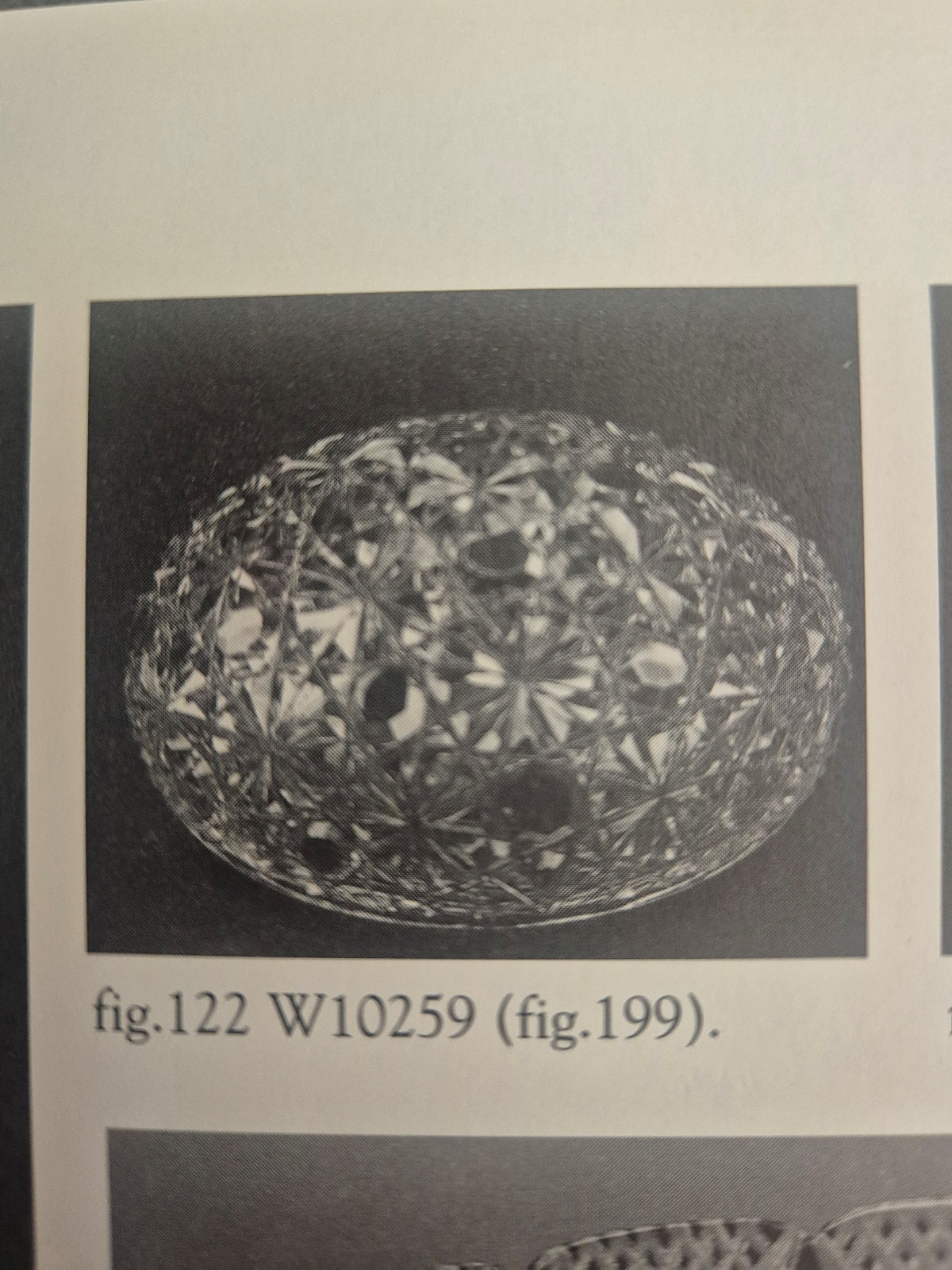
Plafonnier 1: Identified by its more symetrical and busy starburst cut-glass design and matching the picture seen in John Walsh Walsh provenance picture.
Plafonnier 2: Identified by the lighter cut-glass design and its vertical cut to top edge of the plafonnier
Provenance:
- See national archives photo for fitments registered design
- see photo of one cut-glass plafonniers listed in The Glass of John Walsh Walsh by Eric Reynolds
Please Note:
- Prices are for one plafonnier only
- Available to buy seperately or as a pair
Dimensions/ Specifications:
- Ht.(as displayed)60cm/24in, Ht.(min)60/16, W.36/14
- Supplied with the original 3.5in ceiling rose
- Height extendable for additional charge
Not Included:
- 2 x B.22 (4w or 6w) L.E.D gandle/golf Bulbs (Available to purchase in our accessories department)
- screw fixings
John Walsh Walsh (1850–1951)
Soho Glassworks & Vesta Glassworks (Lodge Road, Birmingham)
- John Walsh Walsh is considered one of Britain’s most influential glass manufacturing companies outside the Stourbridge Glass Quarter
- 1850: Birmingham entrepreneur John Walsh Walsh purchased the established Soho Glassworks on Lodge Road to produce his own soda water bottles.
- 1864: The founder John Walsh Walsh passed away, leaving the enterprise to be split among his children.
- 1879–1882: Following a family buyout, control transitioned to Walsh’s daughter Ellen and her husband Thomas Walker. They hired Lewis John Murray as manager, shifting production toward high-end cut crystal and art glassware.
- 1897: The company formally launched its highly iconic “New Opaline Brocade” range, which became heavily sought after for Art Nouveau lighting shades
- 1923: The factory site officially adopted the dual moniker of the Soho and Vesta Glass Works.
- 1926 (23 June): The iconic “WALSH” trademark was legally registered to combat cheap imitation imports from continental Europe.
Related Products
-
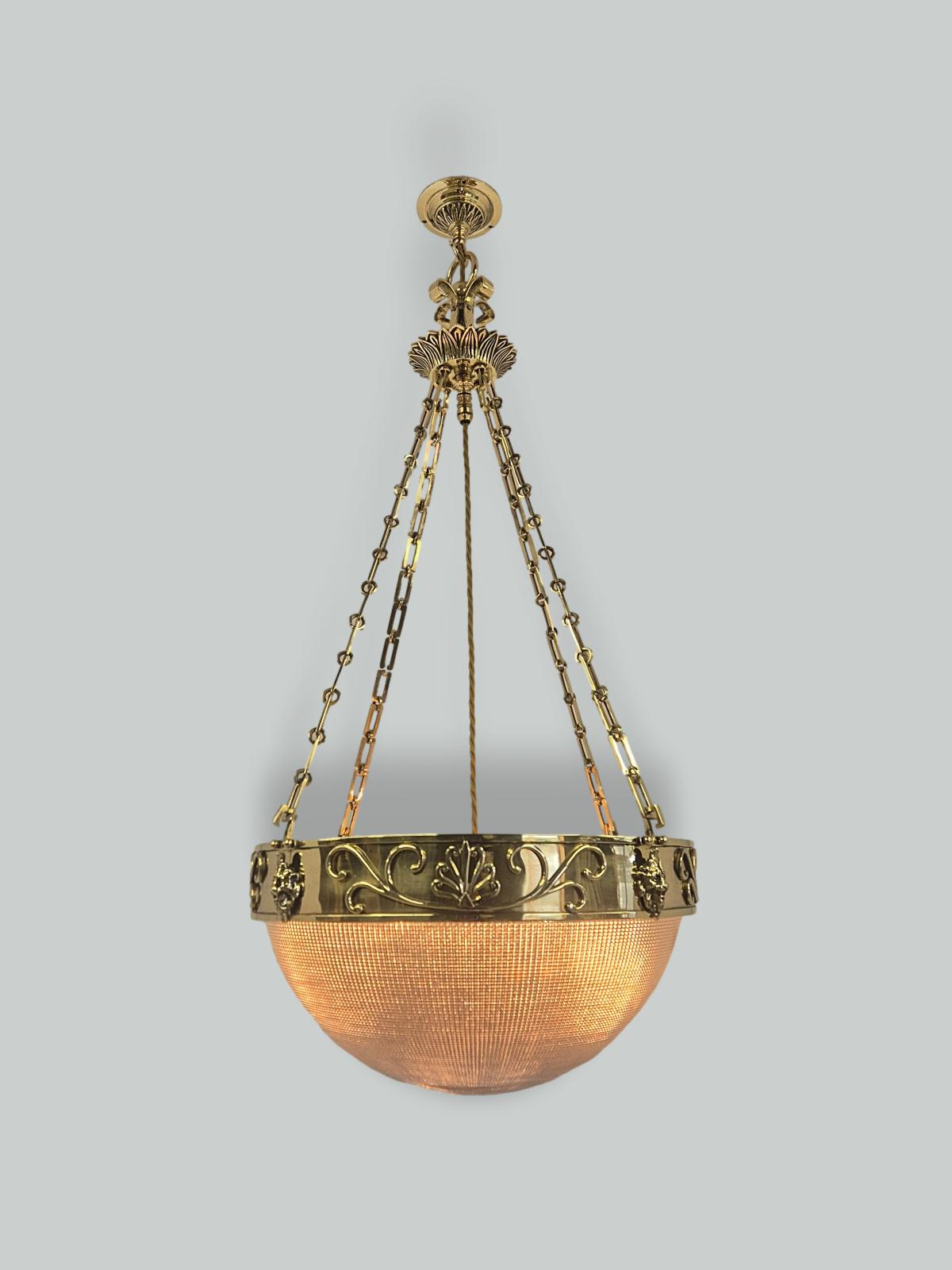
The Holophane Company | Large Regency-style “Blondel” P...
Product Code: JAL1238 £1,495.00 Add to basket -
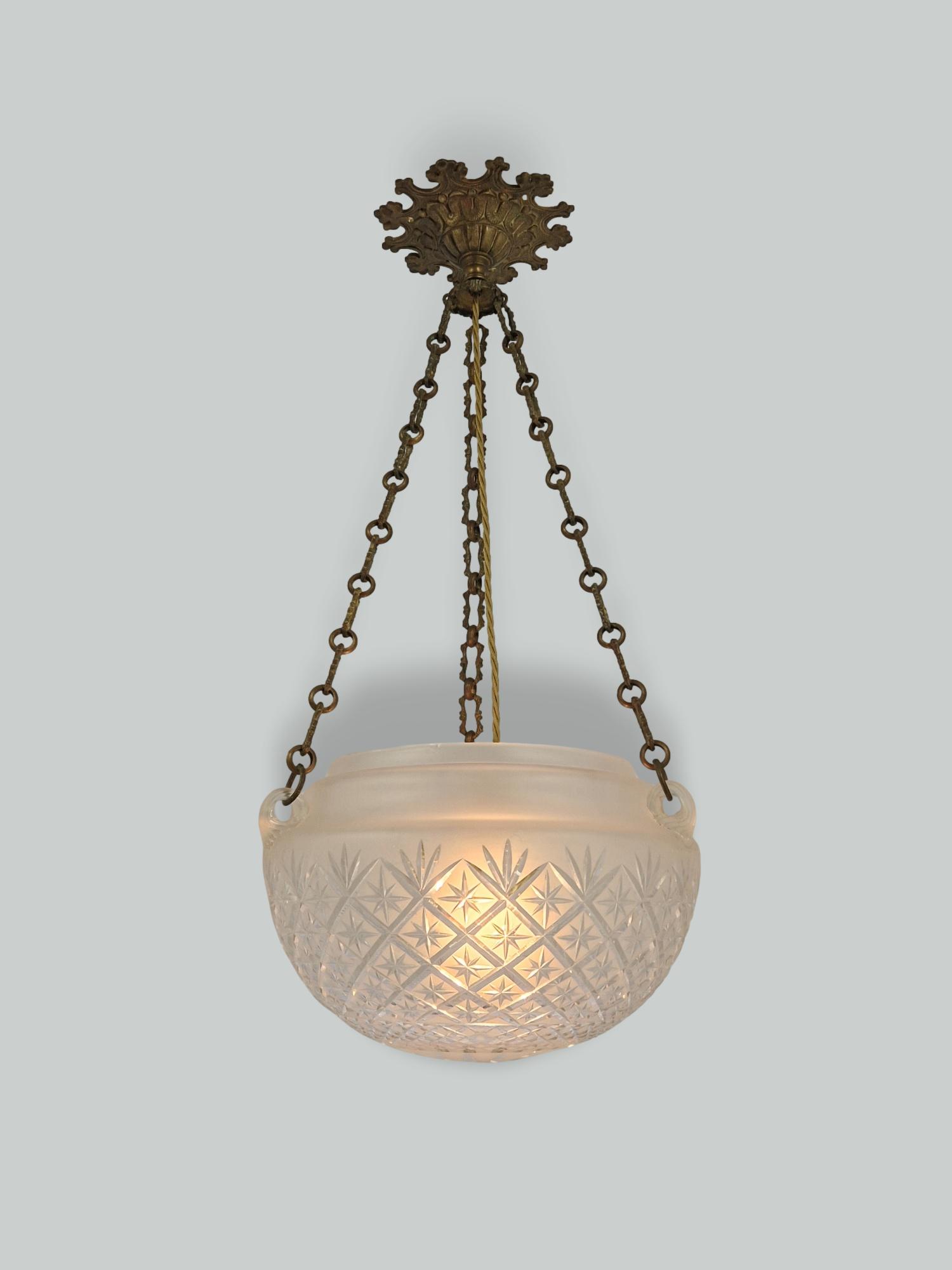
Unsigned | Rare Cut-glass Plafonnier | England c.1905
Product Code: JAL1184 £595.00 Add to basket -
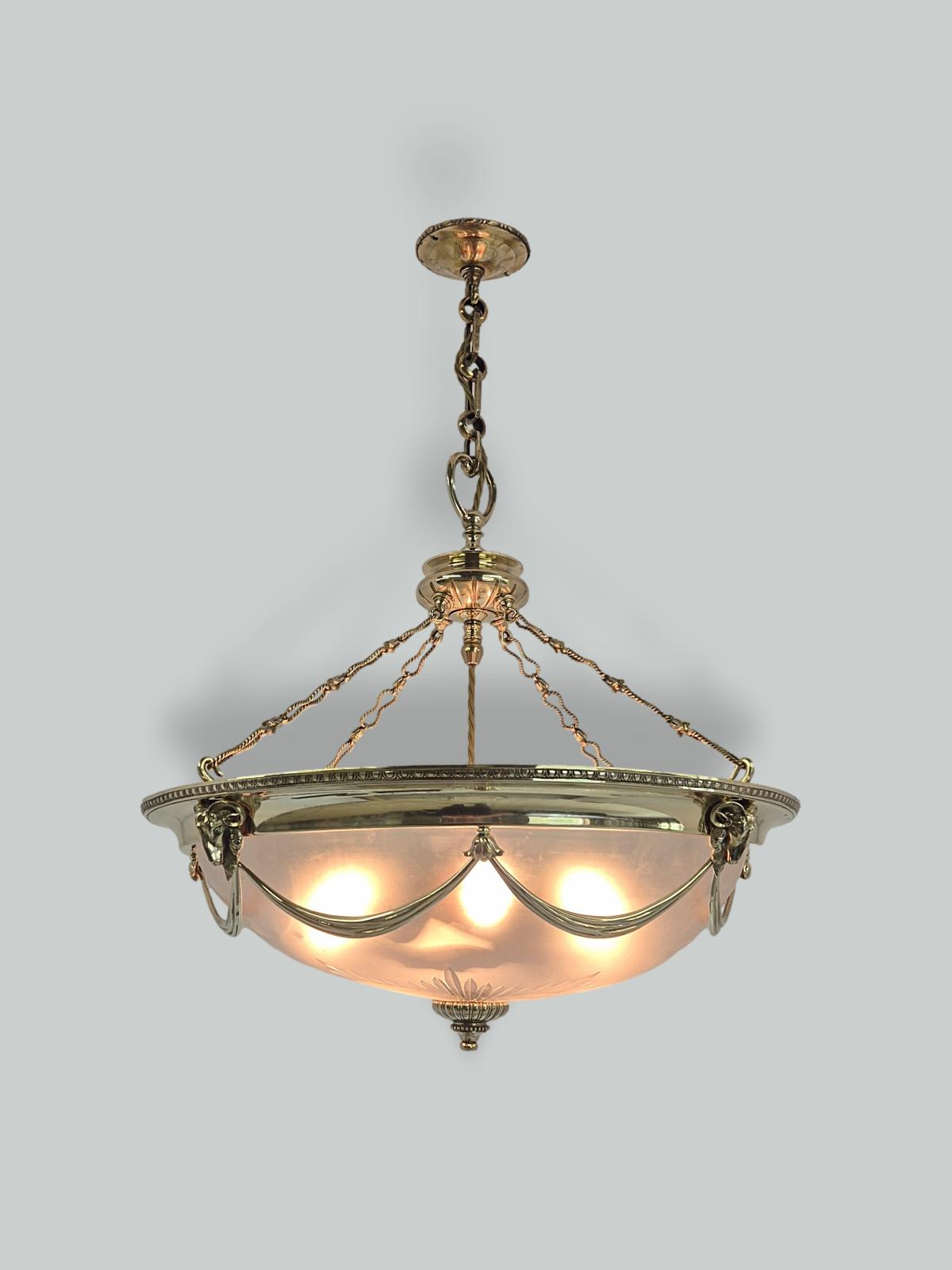
Attributed Faraday & Son, London | Large Adam-style Plafonnier...
Product Code: LG789 £1,795.00 Add to basket